Featured Surgical Implants & Instrument Systems
Precision-engineered trauma, spinal, and reconstructive systems compliant with ISO 13485 & CE standards
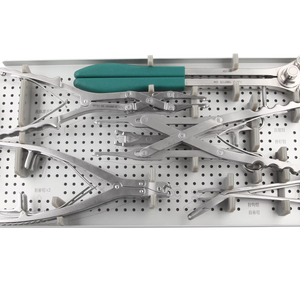
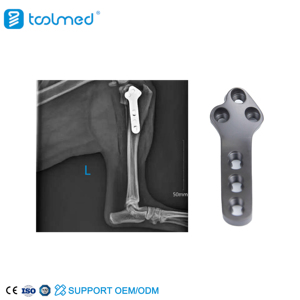
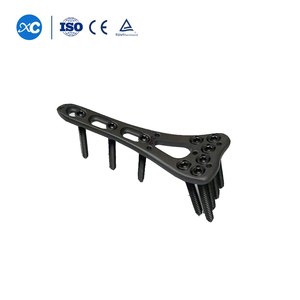
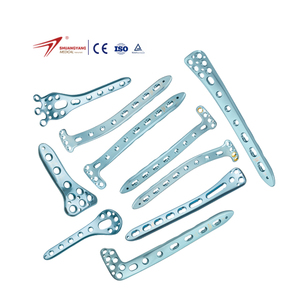
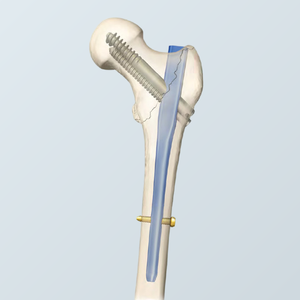
Wholesale Interlocking Intramedullary Intertan Nail Titanium Proximal Femur Trauma Implant
Send an Inquiry
Executive Summary: The Clinical & Procurement Shift in Iraqi Orthopedics
Reconstructive orthopedic surgery across the Republic of Iraq is undergoing a fundamental technological evolution. Decades of complex blast trauma, high-velocity firearm injuries, industrial accidents, and post-traumatic osteomyelitis have placed unprecedented demand on bone grafting solutions within Iraqi trauma centers. Traditionally, surgeons relied heavily on autologous bone harvesting (autograft) or imported fresh-frozen human allografts. However, donor-site morbidity, limited autograft supply in poly-trauma cases, stringent disease transmission risks, and complex cold-chain logistics have rendered traditional methods increasingly inadequate for large-scale clinical needs in Baghdad, Erbil, Basra, and Mosul.
Synthetic Calcium Sulphate Bone Graft Substitutes ($\alpha$-calcium sulphate hemihydrate) have emerged as the definitive clinical benchmark for skeletal defect repair, osteomyelitis dead-space management, and void filling in Iraq. Characterized by 100% complete in vivo bioresorption, predictable degradation kinetics matching natural host bone formation, osteoconductive scaffolding, and exceptional versatility as an antibiotic delivery vehicle (eluting Vancomycin, Gentamicin, or Tobramycin), medical-grade calcium sulphate provides orthopedic surgeons with a reliable, off-the-shelf biomaterial solution.
Biomechanical & Biochemical Mechanisms of Calcium Sulphate ($CaSO_4$)
Synthetic calcium sulphate bone substitutes engineered for medical implantation utilize ultra-pure alpha-hemihydrate ($\alpha-CaSO_4 \cdot \frac{1}{2}H_2O$) crystals. Upon reconstitution with sterile saline or aqueous antibiotic solution, the hemihydrate undergoes a hydration reaction to form calcium sulphate dihydrate ($CaSO_4 \cdot 2H_2O$), setting into a rigid, biocompatible matrix.
1. Predictable Bioresorption Kinetics
Unlike Hydroxyapatite (HA) which can persist in tissue for decades without resorbing, or Beta-Tricalcium Phosphate ($\beta$-TCP) which often exhibits erratic resorption rates, medical-grade calcium sulphate dissolves via simple crystal dissolution at a constant, predictable rate (typically within 4 to 8 weeks depending on defect vascularity and implant volume). This dissolution matches the biological timeline of early appositional trabecular bone ingrowth.
2. Osteoconductive Micro-Fluidic Environment
As calcium sulphate dissolves, it locally releases concentrated calcium ions ($Ca^{2+}$) and sulphate ions ($SO_4^{2-}$). The localized hyper-calcium microenvironment stimulates osteoblast differentiation, activates calcium-sensing receptors on progenitor stromal cells, and triggers local fluid precipitation of a biological apatite layer over surrounding host bone margins. This process accelerates early neovascularization and osteogenesis without causing systemic hypercalcemia.
3. Localized Antibiotic Carrier Kinetics for Infection Control
Post-traumatic chronic osteomyelitis remains a significant clinical challenge in Iraqi surgical facilities. Synthetic calcium sulphate can be mixed in the operating room with heat-stable antibiotics (such as Tobramycin sulphate, Vancomycin hydrochloride, or Gentamicin). Because calcium sulphate sets via an exothermic hydration reaction that remains below critical thermal denaturation thresholds ($<42^\circ\text{C}$), antibiotic bioactivity is preserved. Upon implantation, it elutes high local concentrations of antibiotics—often 50 to 100 times higher than the Minimum Inhibitory Concentration (MIC) for recalcitrant *Staphylococcus aureus* or *Pseudomonas aeruginosa* strains—while maintaining systemic serum levels well below nephrotoxic thresholds.
100% Bioresorption
Dissolves completely in vivo via passive crystallographic dissolution, leaving zero residual foreign material and allowing complete replacement by host trabecular bone.
Antibiotic Elution Carrier
Serves as a dual-function dead-space filler and local drug delivery matrix for Vancomycin and Tobramycin in infected non-union bone repairs.
Ambient Heat Resilience
Requires no expensive cold-chain logistics. Thermally stable up to 50°C, perfectly suited for transport across southern Iraqi provinces and summer storage.
Localized Clinical Application Scenarios Across Iraqi Healthcare Facilities
Medical infrastructure in Iraq ranges from ultra-modern private surgical hospitals in Erbil and Sulaymaniyah to high-capacity public trauma networks under the Ministry of Health (KIMADIA) in Baghdad, Basra, Najaf, and Hillah. Sourcing high-purity synthetic calcium sulphate substitutes directly addresses several distinct localized clinical scenarios:
Scenario A: Complex High-Velocity Blast Trauma & Open Fracture Reconstruction
In major trauma centers such as Baghdad Medical City and Erbil Emergency Hospital, orthopedic surgeons frequently manage severe compound fractures with extensive cortical bone loss. Synthetic calcium sulphate beads or injectable paste act as a reliable osteoconductive filler alongside locking bone plates or intramedullary nails. By packing metaphyseal bone voids created by bullet impact or blast fragmentation, calcium sulphate provides mechanical buttressing and rapid scaffolding for defect consolidation, minimizing the need for secondary iliac crest bone harvesting.
Scenario B: Single-Stage Management of Chronic Post-Traumatic Osteomyelitis
Chronic osteomyelitis resulting from infected war wounds or delayed fracture fixation is a major strain on public hospital beds in Basra and Mosul. Treatment protocols increasingly deploy calcium sulphate loaded with Vancomycin or Gentamicin into debrided medullary cavities. Unlike non-resorbable polymethylmethacrylate (PMMA) antibiotic beads—which require a mandatory second surgical procedure 6 to 8 weeks later for removal—calcium sulphate completely resorbs while eliminating residual bacterial biofilms, permitting single-stage surgical cure and reducing overall hospitalization costs.
Scenario C: Arid & High-Temperature Supply Chain Stability in Southern Iraq
Ambient summer temperatures in provinces like Basra, Thi-Qar, and Missan regularly exceed 50°C. Biologic bone grafts, human allografts, and recombinant growth factors (such as rhBMP-2) require unbroken cold-chain storage ($-20^\circ\text{C}$ to $4^\circ\text{C}$), creating acute risk of product denaturation during regional transport or power interruptions. Synthetic calcium sulphate bone substitutes in vacuum-sealed moisture-proof packaging maintain chemical integrity and room-temperature stability across extreme Iraqi climates, offering unmatched shelf life for emergency stockpiles.
Biomaterial Performance Comparison
The table below summarizes key clinical, biochemical, and operational parameters comparing Calcium Sulphate against competing bone void fillers utilized in Iraqi medical tenders:
| Biomaterial Type | Resorption Rate | Osteoconductivity | Antibiotic Delivery Capability | Cold-Chain Requirement | Risk of Disease Transmission |
|---|---|---|---|---|---|
| Synthetic Calcium Sulphate ($\alpha-CaSO_4$) | Complete (4–8 Weeks) | High ($\text{Ca}^{2+}$ ion release) | Excellent (Elutes 100% drug payload) | None (Room Temp Stable) | Zero (100% Synthetic) |
| Autologous Bone Graft | Natural Remodeling | High (Osteoinductive) | None | N/A (Harvested In Situ) | Zero (Donor Morbidity Risk) |
| Human Allograft (Bone Bank) | Slow / Variable | Moderate | None | Strict ($-40^\circ\text{C}$ to $-80^\circ\text{C}$) | Low to Moderate |
| Hydroxyapatite (HA) | Non-Resorbable / Years | Moderate | Poor (Minimal porosity elution) | None | Zero |
| PMMA Bone Cement | Non-Resorbable | None (Bioinert) | Moderate (Requires 2nd surgery removal) | None | Zero |
Iraq Healthcare Market & Procurement Landscape Analysis
Understanding the procurement mechanisms in the Iraqi healthcare market is essential for medical equipment importers and distributors. Broadly, the market operates across two primary channels:
1. KIMADIA (State Company for Marketing Drugs and Medical Appliances) Tenders
KIMADIA oversees central purchasing for all public hospitals under the Federal Iraqi Ministry of Health in Baghdad. Tenders for surgical implants, traumatology consumables, and synthetic bone substitutes strictly demand:
- Full ISO 13485 Quality Management System compliance from the original manufacturer.
- Valid CE Mark certificates (Class IIb/III classification for resorbable implants) or U.S. FDA 510(k) registration.
- Batch-specific Certificate of Analysis (COA) confirming chemical purity, endotoxin levels ($<0.25\text{ EU/mL}$), and sterility assurance levels ($10^{-6}$).
- Complete technical dossiers (STED) including biocompatibility testing under ISO 10993 standards.
2. Kurdistan Regional Government (KRG) MOH & Private Sector Procurement
The northern autonomous region (Erbil, Sulaymaniyah, Duhok) operates under KRG Ministry of Health regulations. Private hospital chains (e.g., CMC Hospitals, Faruk Medical City) require rapid order fulfillment, low Minimum Order Quantities (MOQ), OEM private labeling, and customized implant sizing options to accommodate diverse surgical preferences.
Ortix Medical: Enterprise Capabilities & Global OEM Excellence
As a global leader in orthopedic trauma and spinal fixation systems, Ortix Medical Devices Co., Ltd. provides comprehensive manufacturing solutions tailored to the stringent demands of international distributors and Iraqi healthcare providers.
60,000 m² Modern Production Base
Operates state-of-the-art cleanroom manufacturing suites (Class 100,000) housing over 450 precision CNC machines and automated packaging units capable of yielding 20,000 finished units per day.
In-House R&D & Test Laboratory
Backed by an engineering team of 70+ specialists. Every lot of synthetic calcium sulphate undergoes rigorous physical phase testing via X-ray Diffraction (XRD) and Scanning Electron Microscopy (SEM).
OEM / ODM & Private Label Support
Full support for Iraqi distributors requiring customized laser marking, private label artwork design, localized Instructions for Use (IFU in Arabic and Kurdish), and custom surgical kit assembly.
Frequently Asked Questions (FAQ) for Iraqi Procurement & Surgical Teams
What is the primary advantage of Calcium Sulphate over PMMA bone cement in infected trauma cases? +
Calcium Sulphate is 100% bioresorbable. Unlike non-resorbable PMMA bone cement—which requires a mandatory secondary surgery to remove the cement beads after antibiotic release—Calcium Sulphate completely resorbs while releasing its antibiotic payload, allowing newly formed bone to fill the space without leaving residual foreign material or requiring secondary surgery.
Can Ortix Medical supply registration dossiers for Ministry of Health (KIMADIA) approval in Iraq? +
Yes. We provide complete technical documentation packages required for product registration with the Iraqi Ministry of Health (KIMADIA) and KRG Ministry of Health, including ISO 13485 certificates, CE certificates, ISO 10993 biocompatibility test reports, viral inactivation studies, and stability data.
How does the ambient temperature in southern Iraq affect product shelf life and setting time? +
Our Calcium Sulphate synthetic bone graft substitutes are packaged in hermetically sealed, moisture-proof aluminum foil pouches inside medical-grade blister packaging. The dry powder remains stable at room temperatures up to 50°C. When mixed in the operating room with sterile saline at standard operating theater temperatures (20°C–25°C), it exhibits a consistent, predictable working time of 3–5 minutes and setting time of 8–10 minutes.
What antibiotics can be safely mixed with Calcium Sulphate in the operating room? +
Heat-stable, water-soluble powder antibiotics are ideal for intraoperative mixing. Vancomycin hydrochloride, Tobramycin sulphate, and Gentamicin sulphate are the most commonly utilized agents in clinical literature. The exothermic setting reaction of Calcium Sulphate remains under 42°C, preserving 100% of the antibiotic's antimicrobial activity.
What are the minimum order quantities (MOQ) and shipping logistics options for Baghdad and Erbil? +
We support low MOQ and flexible mixed-SKU shipments, allowing distributors in Iraq to combine trauma locking plates, intramedullary nails, spinal systems, and calcium sulphate bone graft substitutes in a single shipment. Deliveries are dispatched via direct air freight to Baghdad International Airport (BGW) or Erbil International Airport (EBL), or via sea freight through Umm Qasr Port.
Does Ortix Medical offer OEM private labeling for established medical supply brands in Iraq? +
Yes. We offer turnkey OEM/ODM services including private label packaging, custom sterile blister packing, laser marking on surgical instruments and implant outer shells, and multilingual IFU printouts tailored for Arabic and English requirements.
Partner with a Leading Orthopedic Implant & Synthetic Biomaterial Manufacturer
Expand your product portfolio in Iraq with ISO 13485-certified Calcium Sulphate Bone Graft Substitutes, Trauma Locking Systems, and Spinal Implants. Contact our export specialists today for catalogs, technical dossiers, and direct factory pricing.
Send an Inquiry