Industry Whitepaper: Cervical Interbody Fusion Engineering & ACDF Evolution in Manila
Anterior Cervical Discectomy and Fusion (ACDF) remains the clinical gold standard for managing cervical degenerative disc disease (DDD), cervical spondylotic myelopathy (CSM), traumatic cervical spine disruptions, and acute intervertebral disc herniations. In Metro Manila—the primary medical epicentre of the Philippines encompassing leading healthcare facilities such as St. Luke’s Medical Center, Makati Medical Center, Asian Hospital and Medical Center, and the Philippine General Hospital (PGH)—the demand for high-performance Cervical Interbody Fusion Cages has surged alongside advancements in minimally invasive spine surgery (MISS).
Historically, spine surgeons in the Philippines relied heavily on autologous bone graft harvested from the iliac crest. While osteoconductive and osteoinductive, iliac crest bone autografts are bound by significant donor-site morbidity, prolonged operative times, and localized pain. The introduction of synthetic cervical interbody fusion spacers has transformed spine surgery across the National Capital Region (NCR). Modern cervical interbody cages must fulfill strict biomechanical criteria: restoring intervertebral disc height, re-establishing cervical lordosis (C3–C7 curvature), maintaining indirect foraminal decompression, and exhibiting immediate mechanical stability while offering an environment conducive to permanent arthrodesis.
As a specialized OEM/ODM manufacturer and international exporter of spinal implants, our facility supplies medical distributors, tender suppliers, and private hospital networks across Manila, Quezon City, Taguig (BGC), Pasig, and Cebu with clinically validated interbody cages. Designed to conform precisely to the morphometric profile of Asian cervical vertebrae, our implants minimize endplate stress concentration and significantly lower the incidence of intraoperative endplate fracture and post-operative implant subsidence.
Biomechanical Architecture: PEEK Optima vs. 3D-Printed Porous Titanium
Selecting the optimal implant material is crucial for avoiding stress shielding and cage migration. Our Manila product line features two flagship engineering substrates: Radioparent Polyetheretherketone (PEEK Optima) and Direct Metal Laser Sintered (DMLS) 3D-Printed Titanium Alloy (Ti-6Al-4V ELI).
1. Medical-Grade PEEK Optima Interbody Spacers
PEEK interbody cages are engineered from biocompatible Polyetheretherketone, offering an elastic modulus of elasticity (~3.6 GPa) closely matching human cortical bone (~18 GPa) compared to traditional solid metal constructs. This mechanical synergy drastically mitigates stress shielding according to Wolff’s Law, stimulating biological bone remodeling across the central graft chamber. Key features include:
- Radiolucent Matrix: Allows clear radiographic evaluation of bony bridging and fusion progression via CT and post-op X-rays without metal artifacts.
- Tantalum Radiopaque Markers: Embedded x-ray markers positioned at anterior, posterior, and lateral borders enable accurate intraoperative visualization under fluoroscopy / C-arm guidance.
- Pyramidal Serrated Teeth: Superior and inferior tooth profiles provide robust primary mechanical anchoring to prevent early post-operative cage expulsion or retro-displacement into the spinal canal.
2. 3D-Printed Titanium Micro-Lattice Cages
Additive manufacturing using 3D additive titanium technology allows us to create interbody spacers featuring an interconnected biomimetic porous structural network (porosity 60%–70%, pore size 400–600 μm). This micro-topography mimics native cancellous trabecular bone, facilitating osteoblast attachment, proliferation, and deep vascularized endosteal ingrowth (osseointegration).
| Biomechanical Parameter | PEEK Optima Cages | 3D-Printed Titanium Lattice | Traditional Solid Titanium |
|---|---|---|---|
| Elastic Modulus (GPa) | 3.6 GPa (Close to cortical bone) | 1.5 – 3.0 GPa (Matches cancellous bone) | 110 GPa (High stress-shielding risk) |
| Imaging Compatibility | Radiolucent (Tantalum markers) | Semi-radiolucent (Minimal artifact) | High CT/MRI Scatter Artifacts |
| Primary Anchoring | Anti-migration serrated ridges | Rough cellular micro-surface + teeth | Smooth machined ridges |
| Bone Graft Cavity Volume | Maximized hollow internal window | Integrated porous structure + graft chamber | Standard graft chamber |
| Osseointegration Mechanism | Osteoconductive graft-mediated | Direct osteoinductive surface ingrowth | Fibrous encapsulation tendency |
Engineering Superiority for Asian Anatomical Profiles
Morphometric variations between Western and Asian populations mandate tailored spinal implant footprints. Our research and development team has designed cervical interbody cages specifically accommodating the narrower anterior-posterior (AP) diameters and specific endplate lordotic inclinations common in Filipino and South-East Asian patients.
Anatomical Contour & Lordosis
Offered in anatomical shapes with integrated lordotic angles (4°, 8°, 12°) and parallel profiles to reconstruct sagital alignment effortlessly.
Zero-Profile & Standalone Systems
Features integrated trans-fixation screw channels, eliminating the need for bulky anterior cervical plates and reducing post-op dysphagia.
Maximized Graft Chamber
Expansive central void allows high volume autologous or synthetic bone graft packing to expedite robust intervertebral osseous bridging.
Cervical Cage Size Matrix & Technical Specifications
Our comprehensive inventory ensures Manila spine surgeons have immediate access to exact cage heights and footprints, preventing over-distraction of the posterior facet joints during ACDF procedures.
| Specification Category | Dimensions / Technical Range | Clinical Purpose |
|---|---|---|
| Interbody Heights | 5.0 mm to 12.0 mm (in 1.0 mm increments) | Restores native disc height without neural foraminal pinching. |
| Footprint Options (W x D) | 12 x 14 mm, 13 x 15 mm, 14 x 16 mm | Matches varying anatomical endplate areas across C3 to C7 levels. |
| Lordotic Angles | 0° (Parallel), 4°, 8°, 12° Lordotic | Allows precise lordosis customization for physiological sagittal balance. |
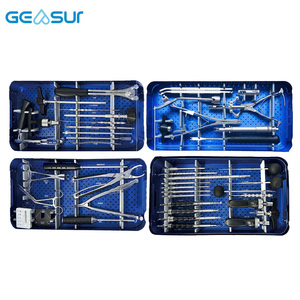
| Instrument Compatibility | Quick-connect insertion handles, trial spacers, stops | Streamlines intraoperative trial sizing and safe insertion. |
| Sterilization Packaging | Double sterile-barrier blister packs or non-sterile kits | Compatible with hospital steam autoclaves & ETO processes in Manila. |
Local Healthcare Dynamics & Medical Procurement in Manila
Navigating the orthopedic medical device market in the Philippines demands a thorough understanding of regulatory compliance, logistics infrastructure, and local procurement habits. Metro Manila functions as the hub for medical device distribution throughout Luzon, Visayas, and Mindanao.
1. Philippine FDA Regulatory Support (CPR & LTO)
Medical devices imported into the Philippines must strictly adhere to regulations enforced by the Food and Drug Administration (FDA) Philippines under the Center for Device Regulation, Radiation Health, and Research (CDRRHR). Cervical interbody cages are classified as Class C/D medical implants. As an experienced OEM exporter, we supply our Philippine distribution partners with comprehensive technical documentation dossiers, including:
- ISO 13485:2016 Quality Management System Certificates
- ASTM F2077 and ASTM F2267 Mechanical Fatigue & Subsidence Test Reports
- Raw Material Certificates (Invibio PEEK Optima LT1 & Medical Titanium Grade 5 Ti-6Al-4V ELI)
- Biocompatibility Test Data (ISO 10993)
- Sterilization Validation Reports (ISO 11137 / ISO 11135)
2. Hospital Supply Chain & Consignment Models in Metro Manila
Hospitals in Manila—such as Cardinal Santos Medical Center, The Medical City Pasig, Manila Doctors Hospital, and University of Santo Tomas (UST) Hospital—frequently operate under consignment or rapid-replenishment procurement frameworks. Distributors must maintain continuous stock of complete instrument sets alongside an extensive matrix of cage sizes. Our low MOQ policy and fast export logistics allow Philippine partners to optimize inventory turnover while avoiding stock-outs during emergency spine trauma cases.
Enterprise Advantages & OEM/ODM Manufacturing Capabilities
As a global leader in spinal and trauma implant manufacturing, our enterprise infrastructure guarantees uncompromised precision, lot-to-lot consistency, and full supply chain transparency.
High Precision CNC Machining
450+ high-speed 5-axis CNC machines from DMG Mori and Citizen Swiss lathes deliver sub-micron tolerances for smooth implant surfaces.
Cleanroom & Sterilization
Class 100,000 (ISO Class 7) cleanrooms ensure particulate-free double barrier sterile blister packaging ready for operating room distribution.
OEM/ODM Private Labeling
Custom laser etching of distributor brand logos, catalog part numbers, lot numbers, and bespoke surgical tray layout engineering.
Manila Procurement FAQ: Frequently Asked Questions
Partner with a Trusted Cervical Cage Manufacturer in Manila
Expand your orthopedic implant portfolio with high-margin, ISO 13485-certified cervical interbody fusion systems. Contact our global export department today for catalogs, technical dossiers, and factory-direct pricing.
Send an Inquiry