Featured Class II Orthopedic Implants & Surgical Devices
Precision-engineered OEM/ODM orthopedic componentry, SLA titanium implants, and trauma instrumentation manufactured under ISO 13485 quality systems for London distributors and global clinical networks.
1. Executive Summary: The Strategic Nexus of Chinese Class II Device Manufacturing and London Healthcare Procurement
The global orthopedic implant market is undergoing a profound structural realignment. Healthcare procurement directors within the Greater London region—spanning National Health Service (NHS) Foundation Trusts, private hospital networks across the Harley Street Medical Area, and regional orthopedic distributors—are navigating an increasingly complex commercial matrix. Driven by post-Brexit UK Conformity Assessed (UKCA) requirements, strict MDR governance, and persistent inflationary pressures on surgical consumables, medical buyers are actively restructuring their Tier-1 and Tier-2 supply chains.
China has emerged as the global epicenter for precision medical hardware fabrication. Chinese Class II medical device orthopedic factories now possess state-of-the-art manufacturing infrastructure matching or exceeding traditional European and North American OEMs. By combining high-speed 5-axis DMG Mori and Swiss-type Citizen CNC machining, Class 7 cleanroom packaging, advanced surface modification (such as Sandblasted, Large-grit, Acid-etched SLA surface treatment), and rigorous ISO 13485 quality control, top-tier Chinese manufacturing centers provide unmatched scale, quality consistency, and cost-efficiency.
Key Insight for London Procurement Officers: Contracting directly with accredited Chinese Class II medical device factories reduces unit acquisition costs by 35% to 55% compared to Western branded equivalents, while maintaining full biomechanical equivalence, material traceability (ASTM F136 Grade 5 Titanium), and complete technical file compliance required by the UK MHRA.
-
Biomechanical Traceability: Every batch of Grade 5 Titanium (Ti-6Al-4V ELI) and PEEK is supplied with certified mill test reports and metallurgical spectral analyses.
-
SLA Surface Engineering: Optimized micro-roughness (Ra 2.0–4.0 µm) accelerating early osseointegration in orthopedic, dental, and spinal implant constructs.
-
London Market Logistics: Dedicated contract logistics hubs establishing rapid reorder dispatch directly into UK warehousing networks within 5–7 business days.
2. Technical Deep Dive: Biomechanical Engineering, SLA Technology, and Class II Manufacturing Rigor
Class II medical devices—encompassing trauma locking plates, cannulated Herbert screws, maxillofacial X-plates, spinal pedicle fixation systems, dental implants, and specialized orthotic braces—demand precise mechanical tolerances and biological compatibility. A failure in implant surface chemistry or structural geometry can result in stress shielding, aseptic loosening, or hardware fracture under cyclic physiological loads.
2.1 SLA (Sandblasted, Large-grit, Acid-etched) Surface Dynamics
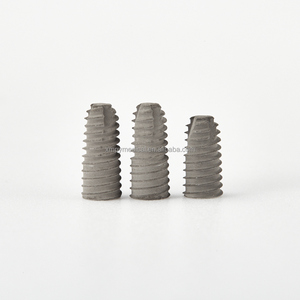
Osseointegration efficiency is paramount for endosseous load-bearing devices. Modern Chinese orthopedic facilities utilize dual-action surface modifications. The titanium substrate undergoes coarse sandblasting with corundum particles (250–500 µm) under controlled air pressure to introduce macro-roughness, followed by intensive hot acid etching using a concentrated HCl/H₂SO₄ mixture. This process yields a complex micro-porous top layer that substantially increases the total contact surface area, enhancing osteoblast adhesion, fibronectin binding, and mineralized matrix deposition.
2.2 Precision Trauma Fixation: Headless Cannulated Herbert Screws
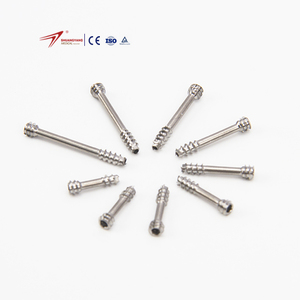
Headless cannulated compression screws (Herbert screws) represent a pinnacle of trauma engineering. Fabricated from Ti-6Al-4V ELI, these screws feature differential pitch threads between the proximal and distal ends. As the screw advances across a fracture site—such as scaphoid non-unions or osteochondral lesions—the pitch differential pulls the bone fragments together, generating high dynamic interfragmentary compression without leaving a prominent screw head that could impinge on surrounding soft tissue or cartilage structures.
2.3 Maxillofacial Reconstruction & Low-Profile CMF Plating
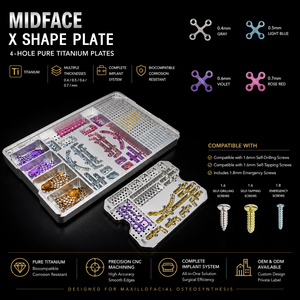
Maxillofacial surgery demands ultra-low profile implants that contour seamlessly to complex facial osteology. Titanium X-plates and mini-fragment plates designed for facial trauma and orthognathic reconstruction undergo precision electrochemical anodization to create an inert passivation layer (Type II anodization), improving fatigue strength while providing color-coded visual identification for surgical teams operating in high-volume trauma bays in London hospitals.
3. Localized Application Scenarios: Deploying Class II Devices in Greater London & UK Clinical Environments
Understanding the exact operational environment where medical devices are deployed is vital for establishing compliance, kit ergonomics, and surgical acceptance. Implants and orthotic devices produced in China's top Class II facilities are designed specifically to meet the high clinical demands of major UK surgical settings:
3.1 NHS Major Trauma Centers (e.g., Royal London Hospital, St Mary's Hospital)
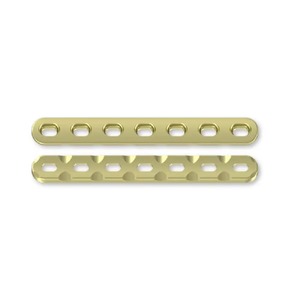
High-energy acute trauma presenting at London’s tertiary trauma centers requires high-strength limited compression locking plates (LC-DCP), distal tibia plates, and intramedullary proximal femoral nails (PFNA). China-manufactured trauma sets feature universal screw thread geometry compatible with standardized AO/ASIF instrumentation driver tips, enabling immediate integration into NHS theatre stocks without requiring costly capital replacement of existing power tool drivers.
3.2 Harley Street Private Surgery & Specialist Reconstructive Centers
Private outpatient surgery clinics in Central London prioritize reduced operating theatre times, low patient morbidity, and exceptional cosmetic outcomes. SLA-surface pure titanium dental implants, PEEK cranial reconstruction meshes, and customized CMF X-plates manufactured via contract OEM agreements deliver ultra-precise anatomical fit, minimizing intraoperative bending and shortening surgical duration.
3.3 Post-Acute Orthotic & Rehabilitation Clinics in the Home Counties
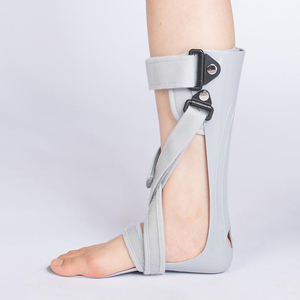
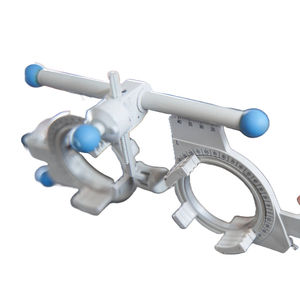
Outpatient rehabilitation networks across Greater London and surrounding regions utilize prosthetic orthopedic foot support drop splints, traction braces, and Ankle-Foot Orthosis (AFO) shells to treat foot drop resulting from stroke, nerve injury, or neuromuscular disorders. OEM drop splint braces manufactured with high-impact thermoplastic polypropylene and breathable composite liners provide rigid lateral stability alongside lightweight patient comfort for long-term daily wear.
3.4 Large Animal Veterinary Surgical Specialists Across the UK
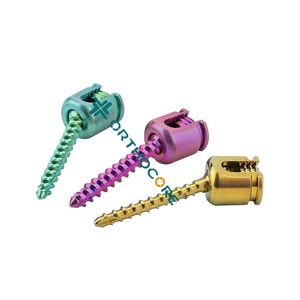
The UK veterinary orthopedic market—particularly equine surgical hospitals and large animal specialist centers in the home counties—requires heavy-duty spinal screws, dynamic compression plates, and external fixators capable of withstanding massive mechanical loads (exceeding 500 kg body mass). Specialized veterinary spinal screws produced in dedicated China facilities offer deep thread pitches and augmented core diameters engineered specifically for animal anatomy.
4. Regulatory White Paper: UKCA, MHRA, and Global Quality Systems Governance
Navigating the UK regulatory landscape post-Brexit requires a clear understanding of the Medicines and Healthcare products Regulatory Agency (MHRA) guidelines. Distributing Class II medical devices in London requires strict adherence to quality and documentation protocols:
-
ISO 13485:2016 Certification: Comprehensive auditing of design, raw material procurement, CNC machining, washing, primary pouch packaging, and final ETO/Gamma sterilization processes.
-
UKCA & CE Mark Alignment: Complete technical file compilation (STED format), clinical evaluation reports (CER), and risk analysis pursuant to ISO 14971 standards.
-
Cleanroom Validation: Manufacturing conducted in certified ISO Class 7 (Class 10,000) cleanrooms with bioburden monitoring and low particulate counts.
-
Traceability & UDI Compliance: Unique Device Identification (UDI) laser marking directly onto implant surfaces for seamless track-and-trace throughout hospital inventory systems.
5. Enterprise Advantages: OEM/ODM Customization & Manufacturing Capabilities
Partnering with China’s leading medical device factories provides global buyers with a strong competitive edge. Our manufacturing facilities combine deep engineering expertise with flexible production models designed to support both high-volume healthcare contracts and niche custom implant runs.
Our infrastructure includes an in-house biomechanical testing laboratory equipped with static and dynamic axial fatigue testers, torsional testing units, and surface profilometers. Whether you require custom laser-etched branding, modified thread profiles, or white-label sterile barrier packaging, our engineering team manages the transition from CAD prototype to mass production efficiently.
6. Frequently Asked Questions (FAQ) for UK & London Buyers
Clear, direct answers to common questions raised by procurement officers, medical device distributors, and hospital purchasing departments in London and the wider UK market.
Q1: How do Chinese Class II medical device factories ensure compliance with UKCA and MHRA regulations?
Top Chinese manufacturers operate strictly under ISO 13485:2016 quality management systems and maintain technical documentation packages aligned with UK MDR requirements. We work closely with UK Responsible Persons (UKRP) and authorized representatives to ensure all technical files, clinical evaluation reports, and risk management documentation pass MHRA audits smoothly.
Q2: What is the standard lead time for delivering bulk orthopedic implant shipments to London?
For standard catalog items (e.g., standard Herbert screws, locking plates, drop splint braces), production and dispatch take approximately 10 to 15 business days. Express air freight directly into London Heathrow (LHR) or sea freight via Thamesport/Tilbury can be arranged based on your stock replenishment urgency.
Q3: Can we request custom OEM laser marking and private-label sterile packaging?
Yes. We provide complete OEM/ODM service suites. This includes high-precision fiber laser etching of your brand logo, lot number, and UDI barcode on every implant, alongside custom blister packing, sterile Tyvek pouch sealing, and bespoke outer box design compliant with UK labeling regulations.
Q4: How is SLA surface quality verified on dental and orthopedic titanium implants?
Every SLA batch undergoes rigorous quality testing. We utilize scanning electron microscopy (SEM) to verify micro-porosity uniformity, energy-dispersive X-ray spectroscopy (EDS) to confirm complete removal of acid residues, and contact profilometry to ensure surface roughness parameters (Ra and Rz) strictly meet biological standards.
Q5: What options exist for low MOQ mixed-SKU trial orders for UK distributors?
We support growing distributors by offering flexible initial order quantities. Importers can combine multiple product sizes—such as various lengths of maxillofacial X-plates, cannulated screws, and veterinary spinal screws—into a single consolidated trial shipment to evaluate clinical feedback and market demand without over-committing capital.
Partner with China’s Leading Class II Orthopedic Manufacturing Facility
Connect with our senior engineering and export compliance team today to request complete product catalogs, certified material test reports, free evaluation samples, or customized OEM/ODM project quotes for London and global distribution.
Send an Inquiry