Precision Orthopedic Implants & Surgical Systems
Explore our ISO 13485 certified product range engineered for orthopedic trauma, spinal reconstruction, and joint replacement procedures.
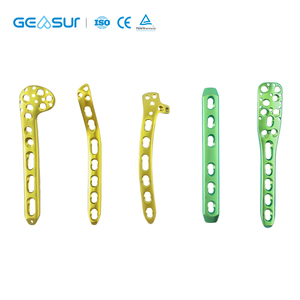
Factory Titanium Distal Lateral Humeral Locking Plate Trauma Fracture Orthopedic Bone Implant
Send an Inquiry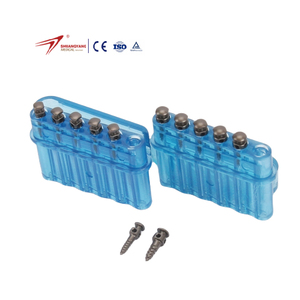
Shuangyang Orthodontic Screw Implant Higher Quality Product In Implants & Interventional Materials
Send an Inquiry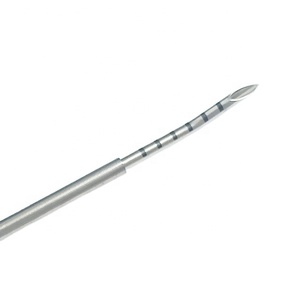
Sinowares Orthopedic Meniscus Repair System CNC Machined Fast Fix Inside Out Needles for Meniscal Repair
Send an Inquiry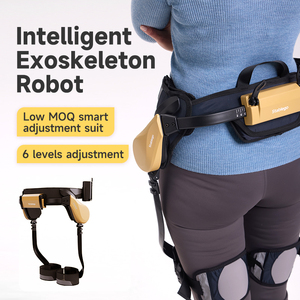
Ultra-Light Carbon Fiber Exoskeleton Low MOQ Features Innovative Lower Limb Exoskeleton Robot For Senior Walking Aid
Send an Inquiry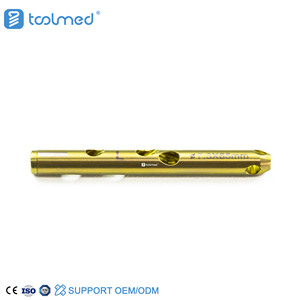
Factory Wholesale of Medical Titanium Alloy Calcaneal Intramedullary Nail Fracture Fixation Orthopedic Surgical Implants
Send an Inquiry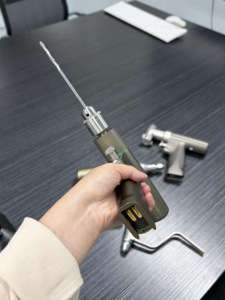
High Performance Orthopedic Bone Drill System for TKR THR Trauma and Joint Replacement Surgery
Send an Inquiry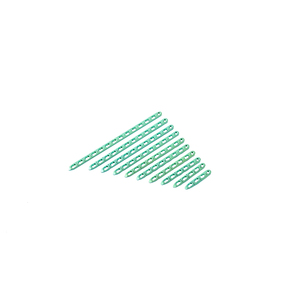
ORTHOCORE 1.5mm Locking Compression Plates Titanium Veterinary Orthopedic Implant Safe & Reliable
Send an Inquiry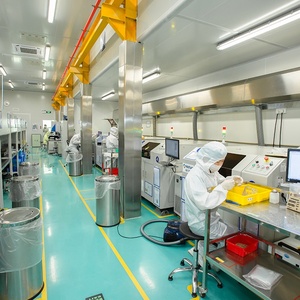
ISO 13485 Certified Medical Device Manufacturing Services for Veterinary Diagnostics PCB Plastic Parts Assembly Class 7/8
Send an InquiryBiomechanical Engineering & Metallurgical Specifications of Thoracolumbar Pedicle Screw Systems
The thoracolumbar spine (T1–L5) represents a mechanically complex junction subjected to immense axial loading, rotational torque, and flexural stresses. When surgical intervention is required—whether for high-energy traumatic fractures, degenerative spine disorders, structural scoliosis, or spondylolisthesis—the mechanical integrity of the pedicle screw system dictates immediate post-operative stability and long-term fusion success. For medical device distributors and hospital procurement committees in Peru, selecting a verified manufacturing partner from China requires an in-depth understanding of the biomechanical parameters, metallurgical choices, and precision engineering standards driving optimal clinical outcomes.
Raw Material Metallurgy: Ti-6Al-4V ELI (ASTM F136) Grade Standard
Our Thoracolumbar Pedicle Screw Systems are machined exclusively from premium medical-grade Titanium Alloy Ti-6Al-4V ELI (Extra Low Interstitial), fully compliant with ASTM F136 and ISO 5832-3 standards. Compared to standard commercial titanium or 316L surgical stainless steel, Ti-6Al-4V ELI delivers superior strength-to-density ratios, exceptional fatigue resistance under cyclic spinal loading, and minimized magnetic susceptibility for high-clarity post-operative MRI imaging. The extra-low interstitial elements (carbon, oxygen, nitrogen, and iron) ensure enhanced fracture toughness and resistance to stress corrosion cracking in high-humidity biological environments.
Biomechanical Verification: Every batch of pedicle screws undergoes rigorous mechanical validation according to ASTM F1717 (Standard Test Methods for Spinal Implant Constructs in a Vertebrectomy Model), demonstrating static axial compression loads exceeding 1,800 N and dynamic fatigue endurance reaching 5,000,000 cycles without structural failure or thread deformation.
Dual-Thread Geometry & Cortical-Cancellous Fixation Mechanics
A primary failure mode in spinal instrumentation is screw pull-out or loosening at the bone-implant interface, particularly in patients presenting with compromised bone mineral density. To mitigate this clinical risk, our pedicle screws incorporate an advanced dual-thread geometric design:
- Proximal Micro-Threads (Cortical Zone): Fine, shallow-pitch micro-threads situated near the screw neck optimize mechanical engagement within the dense cortical shell of the pedicle wall, maximizing immediate pull-out resistance and preventing micro-motion.
- Distal Deep-Pitch Threads (Cancellous Zone): Coarser, wider-pitch threads along the shank section bite deep into the trabecular core of the vertebral body, accelerating tactile feedback during insertion and distributing compressive loads evenly across cancellous bone.
- Self-Tapping Flutes & Conical Tip: Dual cutting flutes located at the conical tip reduce insertion torque requirements by up to 25%, preventing pedicle fracture during manual drive while allowing surgeons precise axial guidance during open or minimally invasive procedures.
Polyaxial Head Articulation & Anti-Cross-Threading Locking Mechanisms
Achieving optimal rod seating across multi-level thoracolumbar constructs often presents severe anatomical challenges. Our polyaxial pedicle screws feature a spherical friction-fit collet design permitting a smooth, omnidirectional head rotation angle of 45° (90° cone of articulation). This extensive angular freedom minimizes the need for aggressive rod bending, preserving the fatigue life of 5.5 mm or 6.0 mm titanium alloy connecting rods.
Furthermore, the locking set screw utilizes a modified reverse-buttress thread (anti-cross-threading feature). By directing radial expansion forces inward toward the screw tulip rather than outward, this design eliminates tulip splay during final tightening to specified torque levels (typically 5.0 to 7.0 Nm), preventing construct disassembly and hardware dislodgement.
Localized Clinical Application Scenarios Across Peru’s Regional Healthcare Infrastructure
Peru’s geographical diversity—spanning coastal urban metropolises, high-altitude Andean mountain ranges, and dense Amazonian regions—presents unique healthcare challenges. B2B medical buyers must evaluate how spinal fixation hardware performs across distinct regional clinical environments and patient demographics.
High-Altitude Trauma & Mining Safety (Andean Region)
In high-altitude regions such as Cusco, Puno, Huancayo, and Cerro de Pasco, heavy industrial activity—including underground mining and high-altitude transport—correlates with severe traumatic spine injuries. Emergency trauma units at regional hospitals require robust, high-load-bearing monoaxial and polyaxial pedicle screw constructs capable of stabilizing unstable burst fractures (Denis Type B/C) and flexion-distraction spinal injuries under challenging surgical conditions.
Degenerative Lumbar Spine Surgery in Metropolitan Lima
In private clinics and tertiary medical centers across Lima (San Isidro, Miraflores, Santiago de Surco), an aging demographic has driven rapid growth in elective lumbar spine surgeries. Procedures treating degenerative disc disease, lumbar canal stenosis, and L4-L5/L5-S1 spondylolisthesis demand low-profile polyaxial screws combined with PEEK or 3D-printed titanium fusion cages to preserve sagittal alignment and promote rapid interbody osseointegration.
Public Healthcare System & Tendering (MINSA & EsSalud)
Peru's public healthcare sector, administered through MINSA (Ministerio de Salud) and EsSalud (Seguro Social de Salud), executes large-scale hospital tenders requiring standardized orthopedic implant kits. Tenders mandate strict lot-to-lot traceability, standardized color-coded ergonomic surgical instruments, and long-term shelf-life packaging compliant with national sanitary regulations.
Emerging MIS Percutaneous Surgery Centers
Leading surgical teams in Arequipa, Trujillo, and Lima are increasingly transitioning toward Minimally Invasive Surgery (MIS) pedicle screw systems. Extended-cannula percutaneous screws combined with MIS rod-passers reduce intraoperative blood loss, shorten recovery times, and minimize tissue disruption—factors crucial for lowering overall hospital bed stays in modern Peruvian health networks.
Peruvian Market Dynamics & DIGEMID Regulatory Compliance Landscape
Successfully importing and commercializing medical devices in Peru demands navigate local market trends and stringent regulatory frameworks governed by DIGEMID (Dirección General de Medicamentos, Insumos y Drogas). As a leading original equipment manufacturer (OEM) in China, Ortix Medical provides technical dossiers and documentation engineered to streamline local registration.
1. DIGEMID Regulatory Classification & Dossier Requirements
Under Peruvian sanitary law (Ley N° 29459 and Decreto Supremo N° 016-2011-SA), Thoracolumbar Pedicle Screw Systems are classified as Class III (High Risk) Medical Devices. To obtain a valid Sanitary Register (Registro Sanitario) in Peru, local importers and distributors must submit a technical dossier (Dossier Técnico) containing:
- ISO 13485:2016 Certification: Proof that the manufacturing facility operates under an audited, internationally recognized Quality Management System.
- Certificate of Free Sale (CLV / CFS): Authenticated documentation confirming that the product is legally commercialized in its country of origin or internationally.
- Comprehensive Biomechanical Test Reports: Full mechanical protocol documentation covering ASTM F1717 fatigue, static bending, and axial tension testing performed by accredited third-party laboratories.
- Biocompatibility Evaluation: Data adhering to ISO 10993 standards confirming cytotoxicity, systemic toxicity, hemocompatibility, and pyrogenicity compliance.
- Spanish-Language IFU & Labeling: Instructions for Use (IFU) translated accurately into Spanish, alongside outer packaging designs compliant with DIGEMID tracing regulations.
2. Post-Pandemic Surgical Backlog & Tender Opportunities
The Peruvian health system is actively addressing a substantial backlog of delayed elective spinal and trauma surgeries across EsSalud and MINSA hospital networks. Consequently, public procurement authorities prioritize suppliers capable of guaranteeing large-volume inventory availability, competitive wholesale pricing, and short lead times to avoid stockouts at regional hospital pharmacies.
3. Strategic Growth of Private Label / OEM Branding in Peru
Prominent Peruvian medical device distributors are increasingly seeking to establish their own proprietary brands rather than reselling heavily marked-up Western brands. Partnering directly with our 60,000 m² Chinese manufacturing plant allows local distributors to contract custom laser-marking (private labeling), customized outer box design, and specialized tray layouts while securing gross profit margins between 45% and 65%.
B2B Procurement FAQ for Peruvian Importers & Hospital Supply Chain Managers
Answers to common questions regarding international logistics, DIGEMID support, low MOQ flexible ordering, and manufacturing quality controls.
How does your factory support Peruvian importers during the DIGEMID registration process?
We provide a complete, organized DIGEMID Technical Registration Package. This includes legalized ISO 13485 certificates, Certificate of Free Sale (CFS/CLV), raw material mill test certificates (Ti-6Al-4V ELI), ASTM F1717 mechanical test reports, ISO 10993 biocompatibility reports, process validation reports, and Spanish-translated IFUs. Our regulatory affairs department works directly with your local Peruvian sanitary manager to resolve any technical queries raised during the DIGEMID review.
What is the standard shipping lead time and logistics route from China to Callao, Peru?
For standard catalog items, orders are dispatched within 10 to 15 business days. Sea freight shipments departing major Chinese ports (Ningbo, Shanghai, or Shenzhen) to the Port of Callao, Peru, typically take 28 to 35 transit days via direct Pacific routes. Express air freight (via DHL, FedEx, or air cargo to Jorge Chávez International Airport in Lima) is available for urgent tender fulfillment, taking approximately 5 to 7 transit days.
Can we place mixed-SKU low MOQ orders to test the Peruvian private clinic market?
Yes. We understand that distributors need to manage cash flow and test local market adoption before committing to high-volume inventory. We support flexible, low minimum order quantities (MOQ) allowing you to combine different screw diameters (e.g., 5.5mm, 6.0mm, 6.5mm, 7.0mm), varying lengths (30mm to 55mm), connecting rods, crosslinks, and surgical instrument sets in a single consolidated shipment.
Are matched reusable surgical instrument sets provided with the pedicle screw system?
Absolutely. Every thoracolumbar pedicle screw system is supported by a matched, reusable surgical instrument set packaged in heavy-duty, autoclavable aluminum trays. The instrument set includes pedicle awls, flexible probes, calibrated taps, polyaxial screwdrivers, rod benders, persuasion tools, anti-torque wrenches, and torque-limiting ratchets designed to withstand repeated hospital autoclaving cycles (134°C steam sterilization) in Peruvian operating rooms.
What quality control guarantees prevent intraoperative failure or screw breakage?
Our manufacturing facility operates under strict ISO 13485 protocols with 100% optical coordinate measurement inspection (CMM) for critical thread dimensions, drive sockets, and articulation angles. Every single implant carries a laser-etched unique device identification (UDI) number detailing raw material batch, production date, and heat treatment lot, ensuring absolute backward traceability from hospital operating theater to raw titanium billet.
Do you offer custom OEM labeling and private brand packaging for Peru?
Yes. We provide complete OEM/ODM private-label services. We can laser-mark your company’s logo, unique SKU codes, and brand name directly onto the screw heads, instrument containers, and outer packaging boxes according to your precise graphic guidelines and DIGEMID compliant labeling requirements.
Factory Superiority & Infrastructure: Ortix Medical Devices Co., Ltd.
Choosing a manufacturing partner in China means securing a reliable, transparent supply chain backed by advanced industrial technology. Ortix Medical Devices Co., Ltd. operates a state-of-the-art 60,000 m² production complex equipped with over 450 precision multi-axis CNC Swiss-type lathes, 5-axis machining centers, and automated wire EDM systems imported from Japan and Switzerland.
Massive Scalability & Daily Production Output
With an daily production capacity reaching 20,000 finished units, our facility handles large-scale international tenders effortlessly. Dedicated production lines for spine, trauma, joints, and sports medicine ensure short production cycles and zero delays for urgent restocking orders.
In-House Testing Laboratory & R&D Team
Our engineering division houses over 70 dedicated R&D specialists and biomedical engineers. Our certified testing laboratory performs ongoing fatigue, torsion, axial tension, and surface roughness analyses, ensuring every design iteration pushes the boundaries of orthopedic safety.
From cleanroom washing and primary packaging in Class 7 and Class 8 ISO-certified cleanrooms to automated anodization surface treatments, we maintain total control over the manufacturing lifecycle. This end-to-end integration guarantees consistent lot-to-lot quality and competitive factory-direct pricing for Peruvian medical device businesses.
Partner with China’s Leading Thoracolumbar Spine Implant Factory
Expand your orthopedic implant portfolio in Peru with ISO 13485 certified products, full DIGEMID documentation support, competitive factory-direct pricing, and low-MOQ flexibility.