High-Performance Surgical Implants & Instrument Sets
Certified Grade 5 ELI Titanium (Ti-6Al-4V) and 316L Stainless Steel implants engineered for orthopedic trauma centers, government tenders, and private hospital networks in Bangladesh.
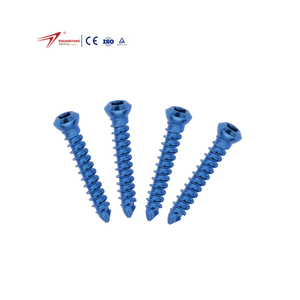
Shuangyang Medical Orthopedic Trauma Implants 2.0mm Titanium Orthopedic Cortex Screw - Quadrangle Design
Get a Quote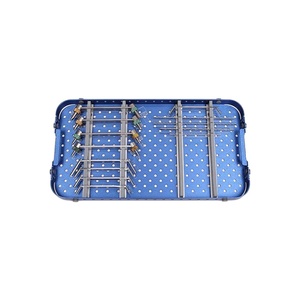
Orthopedic Implants Manufacturer 1.5/2.0/2.4/2.7/3.5mm Veterinary Orthopedic Instrument Kit
Get a Quote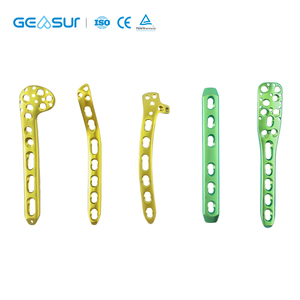
Factory Titanium Distal Lateral Humeral Locking Plate Trauma Fracture Orthopedic Bone Implant
Get a Quote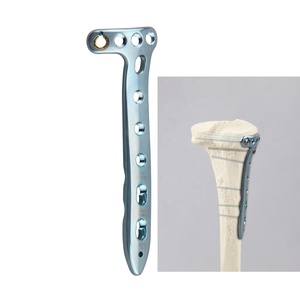
Clinical Use Variable Angle Titanium Bone Plates Trauma Fracture Implants Titanium Locking Plate (Multi-Axial)
Get a Quote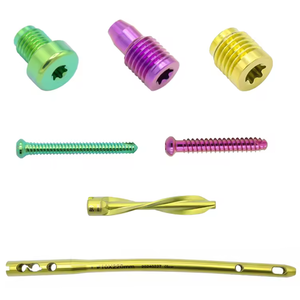
Orthopedic Trauma Screw System Full Set Titanium Surgical Implant Supplier with OEM Service
Get a Quote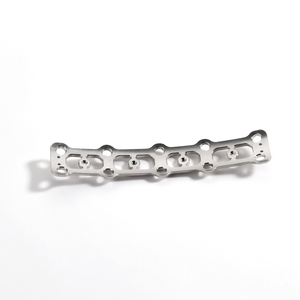
Titanium Alloy Bone CNC Machining Stud High Quality Orthopaedics Department Use 3D CNC Part Implant Plate
Get a Quote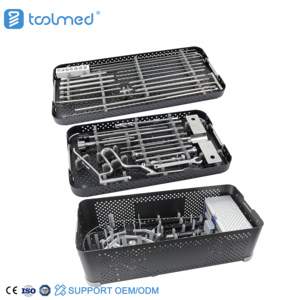
High Quality Titanium Femoral Intramedullary Nail Medical Orthopedic Implant Instrument Set TOOLMED
Get a Quote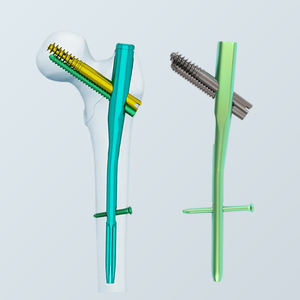
Titanium Intertan Interlocking Intramedullary Nail Implant For Orthopedic Fracture Trauma Treatment
Get a Quote1. Strategic Overview: Navigating Bangladesh’s Orthopaedic Supply Chain Landscape
The healthcare architecture in Bangladesh is undergoing an unprecedented structural transition. Rapid urbanization, large-scale infrastructure projects, and the expansion of national transit corridors (such as the Dhaka-Chittagong and Dhaka-Sylhet highways) have led to a substantial increase in complex high-energy trauma cases, particularly open fracture fixations and multi-fragmentary long-bone injuries. Consequently, orthopaedic surgeons across tier-1 medical centers—such as National Institute of Traumatology and Orthopaedic Rehabilitation (NITOR), Dhaka Medical College Hospital (DMCH), Chattogram Medical College Hospital, and top-tier private institutions like Square Hospital and Evercare Hospital—demand ultra-precise, anatomically contoured titanium and stainless-steel implant systems.
Historically, Bangladesh relied heavily on expensive European or North American medical device brands, which created significant financial friction for average patients and strained hospital procurement budgets under government tenders (CMSD / DGHS). However, over the past decade, a major paradigm shift has taken place. Bangladeshi medical equipment importers, local distributors, and hospital procurement boards are actively partnering with specialized Custom OEM orthopaedic implants manufacturer factories and exporters. By leveraging certified Chinese OEM/ODM hubs operating under ISO 13485 management and US FDA registrations, Bangladeshi importers can secure international-grade titanium bone plates, intramedullary nails, pedicle screw systems, and sports medicine devices at optimized factory-direct costs.
2. Biomechanical Metallurgy & Manufacturing Competence: Why Material Integrity Matters
Orthopaedic implants operate under extreme cyclic fatigue stresses within a harsh electrochemical biological environment. Implants supplied to Bangladesh must fulfill stringent mechanical yield strength, fatigue endurance, and biocompatibility criteria. Our manufacturing ecosystem integrates raw material control with advanced multi-axis machining to ensure zero hardware failure post-implantation.
Grade 5 ELI Titanium (Ti-6Al-4V / ASTM F136 / ISO 5832-3)
For load-bearing application scenarios, such as Thoracolumbar Posterior Pedicle Screw Systems and Proximal Femoral Intramedullary Nails (PFNA), we utilize Grade 5 Extra Low Interstitial (ELI) Titanium. Ti-6Al-4V ELI exhibits superior tensile strength (≥ 860 MPa) and a low elastic modulus (approx. 110 GPa) that closely matches cortical bone compared to traditional stainless steel. This biomechanical affinity minimizes the "stress shielding" effect, promoting accelerated osseointegration and reducing postoperative bone resorption in Bangladeshi osteoporotic patients.
316L Implantation-Grade Stainless Steel (ASTM F138 / ISO 5832-1)
In cost-sensitive clinical environments or specific temporary fracture stabilization procedures (such as pediatric fracture repair, K-wires, and select external fixation constructs), 316L vacuum-melted stainless steel remains a vital option. Our automated chemical passivating process forms a chromium oxide protective barrier, drastically lowering nickel ion release rates (< 0.01 μg/cm²/week), preventing local inflammation and adverse tissue reactions.
| Biomechanical Metric | Ti-6Al-4V ELI Titanium (ASTM F136) | 316L Stainless Steel (ASTM F138) | Clinical Advantage in BD Trauma Centers |
|---|---|---|---|
| Ultimate Tensile Strength | 860 - 960 MPa | 580 - 680 MPa | Prevents implant bending under severe weight-bearing loads. |
| Modulus of Elasticity | 110 GPa | 200 GPa | Significantly reduces stress shielding & peri-implant refracture. |
| Fatigue Resistance Limit | > 10,000,000 Cycles | > 5,000,000 Cycles | Ideal for non-union and delayed-union fracture treatments. |
| MRI / CT Compatibility | High (Minimal Artifacts) | Moderate (Magnetic Distortion) | Allows post-op neural imaging in spinal trauma cases. |
| Corrosion Rate (In Vivo) | Virtually Inert (< 0.001 mm/yr) | Low Passivated State | Eliminates metallosis and revision surgery requirements. |
3. Localized Application Scenarios Across Bangladesh’s Healthcare Tiers
To capture market share effectively, Bangladeshi medical device distributors must align their product portfolios with the exact surgical procedures performed in local hospitals. Below is a detailed breakdown of core localized application scenarios where our OEM orthopaedic products deliver significant clinical and commercial value:
Scenario A: High-Volume Highway Trauma & Complex Long-Bone Fractures
High-energy traffic accidents along major transit highways frequently cause comminuted femoral, tibial, and humeral shaft fractures. In centers like NITOR and regional medical college hospitals (Rajshahi, Sylhet, Rangpur), surgical teams require rapid, minimally invasive internal fixation solutions. Our Titanium Intertan Interlocking Intramedullary Nails and Proximal Femoral Nails feature multi-axial locking options and dual-lag screw anti-rotation geometry. This setup allows surgeons to achieve dynamic axial compression, enabling immediate partial weight-bearing for patients and freeing up valuable hospital beds.
Scenario B: Complex Peri-Articular Fractures & Osteoporotic Bone Fixation
Distal lateral humeral fractures and distal tibia Pilon fractures represent some of the most technically challenging cases in orthopaedic surgery. In elderly Bangladeshi patients presenting with severe bone loss or low bone mineral density, standard cortical screws frequently suffer from thread stripping or pull-out failure. Our Variable Angle Titanium Locking Plates (Multi-Axial) enable surgeons to insert 2.4mm / 3.5mm locking screws at up to ±15° off-axis angles. This capability lets surgical teams anchor screws directly into optimal subchondral bone stock, creating a rigid fixed-angle construct that maintains fracture reduction throughout the healing phase.
Scenario C: Spinal Trauma, Degenerative Disc Disease & Deformity Correction
Spinal disorders—ranging from traumatic thoracolumbar burst fractures caused by workplace falls to degenerative cervical myelopathy—are increasingly treated in Dhaka’s specialized neuro-spine units. Our Thoracolumbar Posterior Pedicle Screw System (5.5mm/6.0mm rod platforms) and Anterior Cervical Locking Plate Systems are designed for intuitive insertion. Low-profile plate topographies reduce postoperative dysphagia, while self-tapping thread geometry speeds up pedicle engagement, cutting intraoperative fluoroscopy exposure time for surgical teams.
Scenario D: Specialized Veterinary & Academic Research Applications
With Bangladesh’s agricultural sector expanding alongside dedicated veterinary medicine faculties (e.g., Bangladesh Agricultural University, Chittagong Veterinary and Animal Sciences University), there is a growing demand for small-animal orthopaedic hardware. Our 1.5/2.0/2.4/2.7/3.5mm Veterinary Orthopedic Instrument Kits provide complete, autoclavable instrument sets and targeted micro-plates tailored for canine, feline, and livestock orthopaedic repair.
4. Emerging Local Trends: DGDA Regulations, Tender Dynamics, and OEM Customization
Entering and dominating the Bangladeshi orthopaedic supply market requires a deep understanding of local statutory frameworks and commercial realities. Overseas manufacturers and local importers must navigate three pivotal industry trends:
1. Strict Regulatory Oversight by DGDA (Directorate General of Drug Administration)
The DGDA has significantly tightened import permit prerequisites and medical device registration protocols under the Bangladesh Medical Device Registration Guidelines. Importers can no longer market uncertified medical hardware. To secure a No Objection Certificate (NOC) and Registration Certificate from DGDA, suppliers must provide comprehensive technical dossiers containing:
- ISO 13485:2016 Quality Management Certification.
- Full raw material mill certificates proving ASTM F136 or ISO 5832 metallurgic compliance.
- Mechanical mechanical test reports (axial pull-out, 4-point bending fatigue, torsion testing).
- Biocompatibility test reports (ISO 10993 series for cytotoxicity, sensitization, and systemic toxicity).
- Cleanroom environmental monitoring data (Class 100,000 / ISO Class 8 packaging environments).
2. Government Central Tender Procurement (CMSD & DGHS)
Government healthcare tenders represent massive volume opportunities in Bangladesh. The Central Medical Stores Depot (CMSD) regularly publishes open tenders for orthopaedic implants, trauma plates, and intramedullary nails to supply public hospital beds nationwide. Winning these tenders hinges on achieving an optimal balance between technical compliance and cost competitiveness. Through our large-scale manufacturing capacity (producing over 20,000 units daily), we provide factory-direct pricing that gives our local partner distributors a strong competitive edge in public tender bidding.
3. The Rise of Private-Label OEM/ODM Customization
Leading medical equipment suppliers in Dhaka and Chittagong are increasingly looking to build their own corporate brand equity rather than promoting third-party labels. We offer end-to-end OEM and ODM customization services tailored specifically for the Bangladeshi market:
- Precision Fiber Laser Marking: Custom logo, part numbering, matrix barcode, and batch lot traceability directly etched onto bone plates and screws.
- Custom Instrument Box Design: Modular, color-anodized aluminum graphic sterilizing trays designed to match specific hospital surgical protocols.
- Localized Packaging & IFU: Custom sterile pouch sealing and multilingual Instructions for Use (IFU) adapted to DGDA labeling mandates.
5. Factory Capabilities: Why We Are the Preferred OEM Partner for Bangladesh
Our manufacturing complex represents the pinnacle of modern orthopaedic device engineering. Below are the structural advantages that guarantee uncompromised quality for our export partners:
60,000 m² Manufacturing Facility
Equipped with 450+ ultra-precision CNC multi-axis machining centers, Swiss-type automatic lathes, and high-speed wire EDM machines capable of tolerances within ±0.005mm.
Rigorous Quality Assurance
Certified under ISO 13485 and registered with the US FDA. Every batch undergoes 100% optical coordinate measurement, hardness testing, and surface roughness evaluation.
Full ODM & Custom R&D
Our team of 70+ metallurgical and mechanical engineers provides rapid prototyping, 3D file conversion, finite element analysis (FEA), and custom implant development.
6. Frequently Asked Questions by Bangladesh Orthopaedic Importers & Buyers
What technical documentation do you provide to support DGDA registration in Bangladesh?
We provide a comprehensive DGDA-ready regulatory dossier for all our orthopaedic product lines. This package includes our ISO 13485:2016 quality certificate, US FDA establishment registration details, raw material mill test certificates (ISO 5832-3 / ASTM F136 grade titanium), mechanical fatigue test reports, ISO 10993 biocompatibility test data, sterile barrier validation reports, and sample packaging layouts with IFUs.
What are your payment terms for Bangladeshi medical importers operating under L/C?
We fully support Irrevocable Commercial Letters of Credit (L/C at sight) issued by top-tier Bangladeshi banks (such as Eastern Bank Limited, Standard Chartered Bangladesh, Islami Bank, Prime Bank, and BRAC Bank). We also accept Telegraphic Transfers (T/T) with flexible advance payment arrangements for customized OEM production runs.
How are shipments delivered to Dhaka or Chittagong Port, and what are the standard lead times?
For urgent hospital requirements, we dispatch goods via Express Air Freight directly to Hazrat Shahjalal International Airport (DAC) in Dhaka (typical transit time: 3 to 5 business days). For high-volume stock orders or hospital tenders, sea freight shipments are routed through the Port of Chittagong (CGP) with a transit window of approximately 14 to 20 days depending on shipping lines. Standard catalog inventory ships within 7 days, while custom OEM orders follow an agreed production schedule of 20 to 30 days.
What is your Minimum Order Quantity (MOQ) for custom private-label branding?
We maintain a flexible, distributor-friendly MOQ policy. For standard catalog items, we support mixed-SKU starter orders starting at low quantities, allowing you to combine bone plates, cortical screws, intramedullary nails, and instrument sets in one shipment. For custom laser marking and OEM branded packaging, our MOQs are kept low to help new distributors enter the Bangladeshi market with minimal upfront financial risk.
Do your implant systems come with dedicated surgical instrument sets?
Yes. Every implant family—including our locking plate platforms, intramedullary nails, pedicle screw constructs, and veterinary kits—is supported by a fully matched, autoclavable surgical instrument kit. These instruments are crafted from surgical-grade stainless steel and aluminum alloys, providing surgeons with ergonomic handling, precise drill guides, taps, and torque-limiting screwdrivers.