Orthopedic & Spinal Implant Solutions
Explore our high-precision titanium and surgical alloy implants designed for rapid hospital evaluation, contract manufacturing, and direct OEM supply.
Biomechanical Engineering in Cervical Laminoplasty Systems
A comprehensive analysis of posterior cervical reconstruction, osteotomy hinge stabilization, and OEM manufacturing protocols for modern spine surgery.
1. Clinical Intent & Biomechanical Imperatives in Posterior Cervical Decompression
Cervical Spondylotic Myelopathy (CSM) and Ossification of the Posterior Longitudinal Ligament (OPLL) represent primary clinical indications for posterior cervical spine surgery across leading academic medical centers. While laminectomy with fusion provides rigid stabilization, it inherently eliminates segmental motion and accelerates Adjacent Segment Disease (ASD). Cervical laminoplasty—specifically Open-Door (Hirabayashi technique) and Double-Door / French-Door (Kurokawa technique)—preserves motion while achieving effective canal expansion.
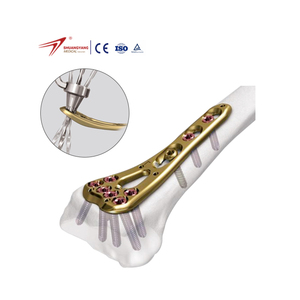
The success of cervical laminoplasty relies on maintaining the surgically created canal expansion without lamina re-closure or hinge spring-back failure. Modern mini-titanium plates provide immediate rigid fixation across the osteotomy gap, anchoring the elevated lamina to the lateral mass or contralateral lamina facet.
| Surgical Parameter | Open-Door Laminoplasty (Hirabayashi) | Double-Door Laminoplasty (Kurokawa) | Laminectomy & Fusion |
|---|---|---|---|
| Segmental Motion Preservation | High (70% - 85% range of motion retained) | High (75% - 90% range of motion retained) | Zero (Complete segmental fusion) |
| Hinge Fixation Mechanism | Unilateral Lateral Mass Plate & Bone Block | Bilateral Midline Lamina Spacers / Mini-Plates | Pedicle / Lateral Mass Screws & Rods |
| Spring-back / Re-closure Risk | Mitigated via rigid titanium mini-plates | Mitigated via central PEEK/Ti spacers | N/A (Lamina completely resected) |
| Post-op C5 Palsy Incidence | Lower (~4.2% with controlled expansion) | Lower (~3.8% with symmetrical drift) | Higher (~8.5% due to posterior cord shift) |
2. Material Science: Medical Grade Titanium Alloys vs. PEEK Composite Hybrids
As contract manufacturers serving top-tier biomedical distributors, Ortix Medical utilizes medical-grade Titanium Alloy (Ti-6Al-4V ELI conforming to ASTM F136 / ISO 5832-3) and implantable Polyetheretherketone (PEEK-OPTIMA®). Titanium plates offer exceptional tensile yield strength (>860 MPa) and fatigue resistance, essential for enduring dynamic neck flexion and extension cycles.
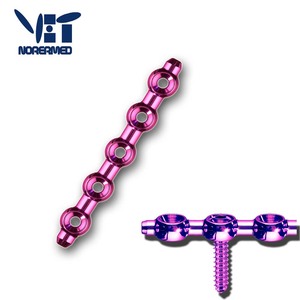
For advanced OEM applications, titanium surface anodization (Type II and Type III color coding) reduces friction coefficient, increases surface hardness, and minimizes metal ion release. Integrated suture eyelet structures within our open-door laminoplasty plates permit secondary reattachment of the posterior muscular complex (spinous process reattachment), restoring natural cervical lordosis and mitigating post-operative axial neck pain.
Serving Boston’s Premier Biomedical & Orthopedic Community
Custom OEM/ODM manufacturing partnerships aligned with the exacting clinical standards of New England's world-leading healthcare networks.
Academic Medical Center Tenders
Boston host world-renowned tertiary hospitals—including Massachusetts General Hospital, Brigham and Women's Hospital, Beth Israel Deaconess, and Tufts Medical Center. OEM implants supplied to regional distributors must satisfy stringent clinical trial compliance, precise dimensional tolerances (±0.005 mm), and full lot traceability from raw billet to sterile packaging.
Greater Boston ASC Expansion
Ambulatory Surgery Centers (ASCs) throughout Waltham, Cambridge, Newton, and Burlington demand streamlined, intuitive surgical tray layouts. Ortix Medical produces low-profile laminoplasty plate configurations packaged with self-drilling, self-tapping locking screws that shorten intraoperative setup times and lower total cost-per-procedure.
Private Label Brand Engineering
Medical technology startups and established orthopedic brand owners across New England utilize our contract manufacturing services to bring novel laminoplasty and trauma fixation systems from CAD concept to FDA 510(k) market clearance rapidly, leveraging our existing DHF master files.
Regional Industry Trends in Spine Surgery Contracting
Key technological and regulatory shifts governing cervical laminoplasty procurement in New England and North America.
A. Shift to Patient-Specific Hinge Geometries
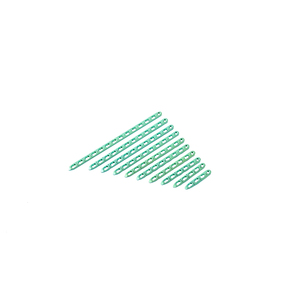
Surgeons in Boston’s research medical centers increasingly favor anatomically contoured plates with pre-bent angles matching the cervical lamina slope (C3 through C7). Pre-contoured designs reduce intraoperative bending cycles, preventing material notch-sensitivity and micro-fractures in titanium plates.
B. Integration of Porous 3D-Printed Titanium Spacers
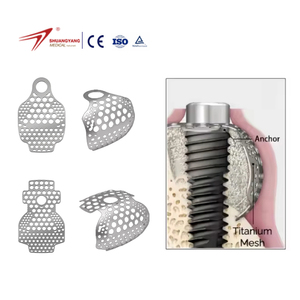
Additive manufacturing using Electron Beam Melting (EBM) or Selective Laser Sintering (SLS) enables the production of porous titanium osteoconductive spacers (50–70% porosity, 300–500 µm pore size). When integrated into laminoplasty plates, these implants eliminate the need for autograft or allograft harvesting while promoting rapid osseointegration.
C. Resilient Supply Chains & Near-Zero Defect Manufacturing
Recent global supply dislocations have prompted New England medical device procurement officers to seek contract manufacturers with extensive vertical integration. Ortix Medical operates over 450 CNC machining centers, automated high-precision optical measurement systems (Keyence), and ISO Class 7 cleanrooms under one roof.
D. Zero-Profile Back-Out Screw Locking Mechanisms
To eliminate post-operative dysphagia and soft-tissue irritation, modern cervical laminoplasty plates require zero-profile, smooth-contour screw locking mechanisms. Our patented dual-locking threads ensure high back-out resistance under dynamic shear forces.
Ortix Medical OEM / ODM Capabilities
Why leading global distributors and spinal implant brand owners choose Ortix Medical as their primary contract manufacturer.
Advanced Micro-Machining
Equipped with 5-axis Swiss-type CNC automatic lathes (Citizen, Tsugami) and ultra-precision milling centers capable of complex surface geometries, micro-hole drilling, and deep thread cuts with sub-micron precision.
Rigid Quality Assurance
Operating under ISO 13485 QMS and FDA 21 CFR Part 820 standards. Every batch undergoes 100% CMM dimensional testing, surface roughness analysis, pull-out torque evaluation, and cleanroom bioburden checks.
Complete Turnkey Services
From custom laser marking (UDI compliance) and color anodizing to custom instrument tray design, packaging in medical-grade blister packs, and technical document drafting for regional registration.
Frequently Asked Questions for Boston & Global Buyers
Clear engineering, regulatory, and logistics answers for medical device purchasing managers and distributor partners.
What technical regulatory documentation does Ortix Medical provide for US FDA 510(k) or international submissions? +
We supply qualified distributors and contract OEM partners with full Technical Files, including ISO 13485 certificates, raw material origin and melt certificates (conforming to ASTM F136 Ti-6Al-4V ELI or ISO 5832-3), ASTM F1717 mechanical fatigue test reports, ISO 10993 biocompatibility test data, and sterile barrier packaging validation (ISO 11137 / ISO 11607). These documents significantly accelerate 510(k) clearance or local hospital registration.
Can Ortix Medical manufacture custom cervical laminoplasty plate shapes based on proprietary CAD models? +
Yes. Our dedicated R&D engineering division (70+ specialists) provides complete ODM development. You can submit CAD files (STEP, IGES, SolidWorks), and our engineers will perform Finite Element Analysis (FEA), prototype 5-axis CNC machining, sample surface passivation, and rapid biomechanical validation prior to mass contract production.
What is the typical Minimum Order Quantity (MOQ) and lead time for shipments to Boston / East Coast ports? +
We support flexible low-MOQ starting orders for evaluation batches and mixed-SKU catalog reorders. Standard catalog items ship within 10 to 14 business days via express air freight directly to Boston Logan International Airport (BOS) or local freight forwarders. Custom OEM production runs typically require 4 to 6 weeks depending on tooling and anodization requirements.
How do your cervical laminoplasty plates address screw back-out and intraoperative fatigue? +
Our laminoplasty fixation system utilizes precision-machined locking mechanism threads on both the screw head and plate hole. When driven, the screw locks securely into the plate, forming a rigid fixed-angle construct. This eliminates independent screw back-out, distributes dynamic fatigue loads evenly across the osteotomy bridge, and prevents micro-motion at the hinge site.
Are matching surgical instrument sets supplied alongside laminoplasty plate implants? +
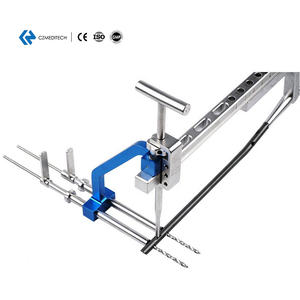
Absolutely. Every cervical laminoplasty plate family is complemented by a fully sterilizable, color-coded stainless steel surgical instrument tray. The set includes custom lamina elevators, plate benders, depth gauges, drill guides, self-retaining drivers, and modular handles—all manufactured in-house under ISO 13485 standards.
Partner with a World-Class OEM/ODM Orthopedic Manufacturer
Whether you represent a hospital network in Boston, a medical device startup in New England, or an international surgical distributor, Ortix Medical delivers precision, compliance, and competitive factory pricing.