High-Precision Orthopedic Implants & Full CoA Traceability for Riyadh Healthcare
Navigating medical device procurement in Riyadh requires uncompromised chemical purity, mechanical fatigue resistance, and rigorous Certificate of Analysis (CoA) verification. As a leading international OEM/ODM manufacturing factory, Ortix Medical supplies Riyadh’s hospitals, trauma centers, and medical distributors with ASTM F136 Titanium, PEEK, and 316L Stainless Steel implants custom-tailored for regional surgical demands.
Featured Orthopedic Systems & Instrument Kits
Explore our core ISO 13485 & CE certified surgical products available for rapid contract delivery and private-label manufacturing in Riyadh.
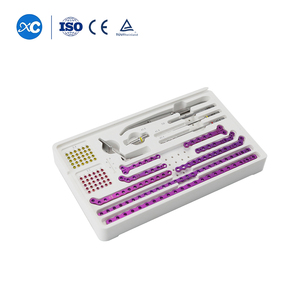
3.2mm Alps Veterinary Orthopedic Surgical Instrument Set & Implant Kit
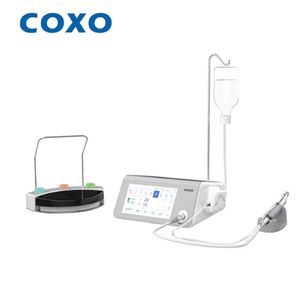
COXO C-Sailor Pro+ Dual Implantation Surgical Motor System
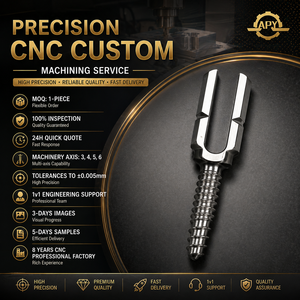
ISO 13485 5-Axis Machined Pedicle Screw Spinal Fixation System
High-Precision Medical-Grade Precision CNC Custom Prototype Parts
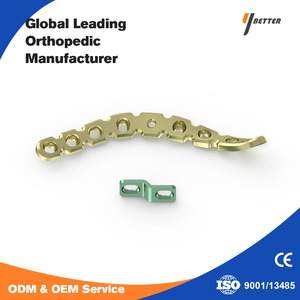
3.2mm Titanium Pelvis Arc Anterior Column Reconstruction Plate
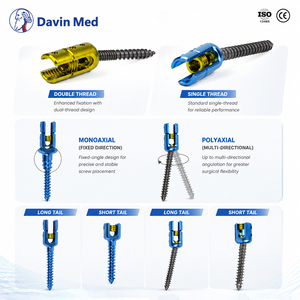
DavinMed Titanium Monoaxial Pedicle Screw System with Sterile Packaging
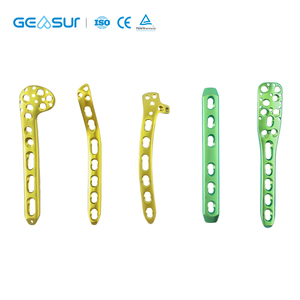
Titanium Distal Lateral Humeral Locking Compression Trauma Plate
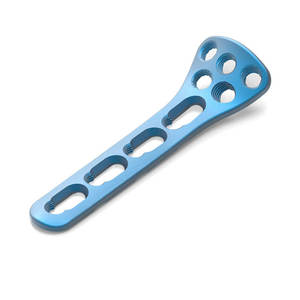
Stainless Steel & Titanium Bone Fixation Implants (Custom Sizes)
Decoding the Certificate of Analysis (CoA) for Orthopedic Implants in Riyadh
In orthopedic surgical engineering, a Certificate of Analysis (CoA) is not merely a formality—it is a mandatory legal and biological safeguard required by the Saudi Food and Drug Authority (SFDA). When procuring spine, trauma, and joint implants in Riyadh, healthcare facilities and contract distributors must audit every raw lot for elemental purity, mechanical integrity, and surface biocompatibility.
Essential Parameters Evaluated in an Ortix Medical CoA
Our certified laboratory issues comprehensive Certificate of Analysis documents per production lot, ensuring full alignment with international biomedical standards and SFDA Technical Documentation Files:
Chemical Composition (OES)
Optical Emission Spectroscopy ensures interstitial elements (Hydrogen ≤ 0.012%, Oxygen ≤ 0.13%, Iron ≤ 0.25%) meet strict Extra Low Interstitial (ELI) titanium thresholds to eliminate brittle fractures.
Tensile & Yield Strength
Mechanical testing reports Ultimate Tensile Strength (≥ 860 MPa for Ti-6Al-4V ELI) and 0.2% Yield Strength (≥ 795 MPa), ensuring severe axial loading support in lumbar spinal pedicle screws.
Microstructure & Phase
Metallographic analysis certifies an equiaxed Alpha + Beta phase structure (Etchant per ASTM E407), preventing micro-void propagation under dynamic biomechanical cyclic stress.
CoA Metallurgical & Mechanical Standard Benchmark
| Implant Alloy Type | Reference Standard | Tensile Strength (MPa) | Yield Strength (0.2% Offset) | SFDA Verification Status |
|---|---|---|---|---|
| Titanium Grade 5 ELI | ASTM F136 / ISO 5832-3 | ≥ 860 MPa | ≥ 795 MPa | Approved / Certified |
| 316L Stainless Steel | ASTM F138 / ISO 5832-1 | ≥ 490 - 1350 MPa | ≥ 190 - 1050 MPa | Approved / Certified |
| Medical PEEK Optima | ASTM F2026 | ≥ 90 - 100 MPa | ≥ 110 MPa (Flexural) | Approved / Certified |
| Co-Cr-Mo Alloy | ASTM F75 / ISO 5832-4 | ≥ 655 MPa | ≥ 450 MPa | Approved / Certified |
Localized Clinical Applications & Procurement Landscape in Riyadh
Riyadh serves as the epicenter of Saudi Arabia's healthcare sector, housing landmark institutions such as King Fahad Medical City, King Faisal Specialist Hospital & Research Centre, and National Guard Health Affairs. The rapid expansion of public health infrastructure driven by Saudi Arabia’s Vision 2030 has dramatically increased the demand for high-volume, cost-effective, and sterile-packaged orthopedic implants.
High-Velocity Trauma Management
With Riyadh's expansive highway network, major trauma centers manage substantial volumes of motor vehicle injuries requiring immediate distal femoral locking compression plates, pelvic reconstruction arc plates, and interlocking intramedullary nail fixation with full chemical CoA documentation for post-operative reviews.
Complex Degenerative Spine Surgeries
Addressing age-related disc degeneration, spondylolisthesis, and lumbar spinal stenosis, Riyadh orthopedic surgeons rely on our 5-axis CNC pedicle screw systems and PEEK interbody fusion cages. Each lot includes micro-roughness (Ra) and porosity certificates supporting rapid osseointegration.
Alignment with NUPCO Tenders & Saudi Vision 2030
The National Unified Procurement Company (NUPCO) centralizes medical device purchases across Kingdom health clusters. Sourcing from an OEM/ODM factory equipped with automated batch tracking and downloadable digital CoAs allows local Riyadh vendors to meet NUPCO’s stringent supplier qualification criteria:
- Automated Lot Number Traceability: Laser-etched Unique Device Identification (UDI) matching physical CoAs directly to surgical tray records.
- Sterile Barrier Integrity: Cleanroom Class 10,000 (ISO Class 7) double-blister packaging certified for extreme ambient temperature stability during transport across the Central Region of KSA.
- Custom OEM Packaging & Arabic/English Labeling: Seamless compliance with SFDA bilingual packaging regulations for clear clinical identification.
Localized Riyadh Market Trends & OEM/ODM Industry Growth
The Saudi medical device market is experiencing a structural paradigm shift. Traditionally dependent on European and American re-sellers, hospital purchasing boards in Riyadh are actively transitioning to direct OEM/ODM partnerships with certified primary manufacturing plants.
Direct Factory Sourcing
Eliminating intermediary distributor markups reduces total implant procurement spend by 30-45% while maintaining identical titanium alloy grade standards verified by certified CoAs.
Rapid Customization (ODM)
Adjusting plate contour radii, screw thread pitches, and instrument ergonomics within 72 hours using 3D CAD modeling tailored to Saudi anatomical studies.
Unbroken Supply Continuity
Maintaining buffer stock in dedicated warehouses minimizes lead times, preventing back-order delays during high-demand surgical cycles in Riyadh.
Enterprise Manufacturing Capabilities & Quality Assurance Architecture
Ortix Medical operates a state-of-the-art 60,000 m² manufacturing ecosystem equipped with over 450 precision multi-axis CNC machine tools, Swiss-type automatic lathes, and high-energy surface treating units. Our production operations follow strict ISO 13485 quality protocols to ensure zero defects across millions of produced units.
5-Axis Machining & Surface Anodization
Using DMG Mori and Citizen Tornos 5-axis CNC machines, we achieve sub-micron machining tolerances (±0.005mm) for complex pedicle screw threads and locking plate holes. Type II Anodization forms a bio-inert oxide layer that enhances corrosion resistance and color-coded surgical sizing.
Cleanroom ISO Class 7 Packaging & Testing
Final cleaning utilizes multi-stage ultrasonic deionized water baths before entry into our ISO Class 7 cleanroom. Physical CoAs verify bio-burden levels (<1.5 CFU/device), bacterial endotoxins (<20 EU/device), and cytotoxic safety per ISO 10993 testing.
Frequently Asked Questions by Riyadh Medical Buyers
Direct answers to compliance, CoA validation, custom production, and logistics questions for Saudi healthcare importers.
How does Ortix Medical verify the authenticity of a Certificate of Analysis (CoA) for Riyadh customs?
Are your orthopedic implants registered with the Saudi Food and Drug Authority (SFDA)?
What is the Minimum Order Quantity (MOQ) for custom OEM/ODM orthopedic implants in Riyadh?
What titanium grade is specified in your Certificates of Analysis for spinal pedicle screws?
Can Ortix Medical manufacture custom patient-specific implants or modified instrumentation for Saudi hospitals?
How are shipping times and cold-chain/ambient storage managed for deliveries to Riyadh?
Partner with a Certified Orthopedic OEM/ODM Factory
Looking for a dependable orthopedic implant factory with guaranteed Certificate of Analysis (CoA) traceability, low MOQs, and fast delivery to Riyadh? Contact our international medical export team today for sample evaluation kits, full material certificates, and factory-direct pricing.