Featured Orthopaedic & Trauma Hardware
Certified Class IIb & Class III medical devices designed for trauma reconstruction, spinal stabilization, joint arthroplasty, CMF, and veterinary applications.
Global Infrastructure Supporting Italian & European Medical Suppliers
Operating under strict ISO 13485 quality system management and FDA registration, providing complete material traceability, technical documentation dossiers, and low MOQ flexibilities for distributors across Italy and Southern Europe.
Executive Industry Report: Strategic Sourcing of Orthopaedic Implants in Italy
The Italian healthcare sector represents one of the most sophisticated medtech markets in Europe, governed by rigorous regulatory frameworks under the European Medical Device Regulation (EU MDR 2017/745). The national health service, Servizio Sanitario Nazionale (SSN), alongside regional procurement bodies (such as Aziende Sanitarie Locali - ASL) and prestigious private clinic networks (e.g., Gruppo San Donato, Humanitas), demands exceptional clinical performance, absolute mechanical durability, and total lot traceability from orthopaedic implant manufacturers factories & exporter in Italy and global OEM manufacturing partners.
Italy’s orthopaedic landscape is defined by an aging population with high expectations for post-operative mobility, driving exponential demand for joint reconstruction, advanced spinal fixation systems, complex trauma plating, and craniomaxillofacial (CMF) implants. Main regional healthcare hubs—spanning Lombardia (Milano, Brescia), Emilia-Romagna (Bologna, Mirandola cluster), and Veneto—require continuous, agile supply chains capable of delivering specialized surgical hardware with zero delay. To remain competitive, Italian distributors and healthcare importers increasingly rely on advanced OEM/ODM production partners offering certified high-precision titanium alloys, PEEK implants, and matched surgical instrumentation sets.
Biomechanical Excellence
Engineered using forged Ti-6Al-4V ELI (ASTM F136) and High-N 316LVM medical grade stainless steel to guarantee exceptional fatigue resistance and biocompatibility.
MDR & ISO Compliance
Complete technical dossiers, ISO 13485 certifications, and FDA registration details to streamline product registration with Italian health authorities.
Turnkey OEM/ODM Capability
In-house 5-axis CNC machining, laser etching, private-label Italian IFU packaging, and dedicated instrument kit development.
Material Metallurgical Standards & Precision Manufacturing Capabilities
Modern surgical implant performance depends fundamentally on material integrity and micro-machining tolerances. Sourcing implants for the Italian market requires strict adherence to international metallurgical standards:
- Titanium Alloy (Ti-6Al-4V ELI - ASTM F136 / ISO 5832-3): Formulated with Extra Low Interstitial elements, offering outstanding yield strength, low modulus of elasticity close to human cortical bone, and superior biomechanical compatibility for trauma plates, pedicle screws, and joint prostheses.
- Unalloyed Pure Titanium (ASTM F67 / ISO 5832-2): Highly pliable, ideal for maxillofacial cranial meshes, anterior column pelvis reconstruction plates, and delicate reconstructive surgical applications.
- High-N 316LVM Stainless Steel (ASTM F138 / ISO 5832-1): Vacuum arc remelted stainless steel exhibiting extreme tensile strength and fracture toughness, widely specified in high-load trauma dynamic compression plates and intramedullary nails.
- PEEK Polymers & 3D Porous Titanium: Used extensively in cervical and lumbar interbody fusion cages, offering radiolucency and optimal stress distribution to reduce stress shielding effects.
Manufacturing facilities utilize multi-axis CNC Swiss automatic lathes, 5-axis high-speed machining centers, wire electrical discharge machining (EDM), and automated surface anodization units (Type II and Type III color coding). Every implant production lot undergoes rigorous mechanical testing—including dynamic fatigue testing under ASTM F1264 for intramedullary nails and ISO 14801 for dental/orthopaedic posts—ensuring complete stability during surgical implantation and long-term biological healing.
Comprehensive Product Breakdown & Surgical Applications
1. Trauma Internal Fixation Systems
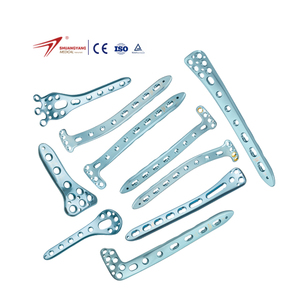
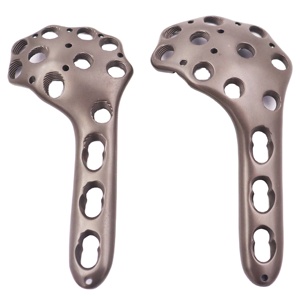
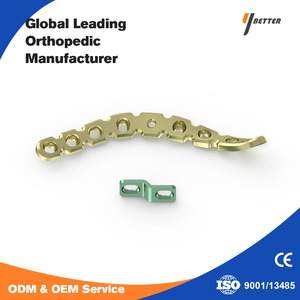
Trauma management requires anatomical adaptation and dynamic mechanical stabilization. Our trauma range includes localized anatomical locking plates such as the Distal Femur Medial Condyle Large Fragment Locking Plate and the Tibial Locking Plate System. Designed with variable-angle locking screw holes and dynamic compression slots, these plates allow surgeons to achieve rigid rigid fixation or controlled micro-motion for secondary callus formation. Complementing these are specialized pelvic reconstruction plates (3.2mm anterior column arc plates) designed for severe high-energy pelvic ring fractures.
2. Intramedullary Fixation Nailing Systems
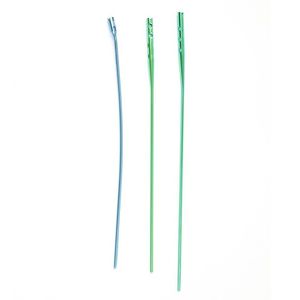
Intramedullary nailing is the gold standard for long-bone shaft fractures. Systems such as the Ulna Interlocking Intramedullary Nail and Proximal Femoral Nails (PFNA) feature anatomically pre-bent rods, cannulated drill pathways for reamed or unreamed insertion, and dynamic/static locking configurations. These implants provide axial stability and torsional resistance while facilitating minimally invasive surgical (MIS) approaches favored by contemporary European trauma centers.
3. Spinal Fixation & Interbody Fusion Cages
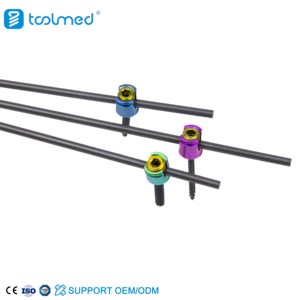
Spinal disorders in Europe’s aging demographic necessitate advanced stabilization systems. Our portfolio covers anterior cervical plates, thoracolumbar posterior pedicle screw-rod constructs (5.5mm/6.0mm titanium rods), cervical laminoplasty plates, and PEEK/3D-printed titanium fusion cages (PLIF, TLIF, ACDF). Micro-textured porous surfaces encourage early osteoblast cell attachment, accelerating interbody osseointegration.
4. Joint Arthroplasty & Hip/Knee Reconstruction
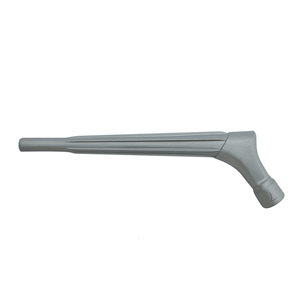
Total Joint Arthroplasty demands meticulous surface finish and tribological optimization. Forged Ti6Al4V hip prosthesis stems with plasma-sprayed hydroxyapatite (HA) or porous titanium coatings promote rapid press-fit biological fixation. Paired with highly cross-linked polyethylene (HCLPE) acetabular liners and modular femoral heads, these systems provide exceptionally low wear rates for primary and revision hip replacement surgeries.
5. Craniomaxillofacial (CMF) & Skull Reconstruction
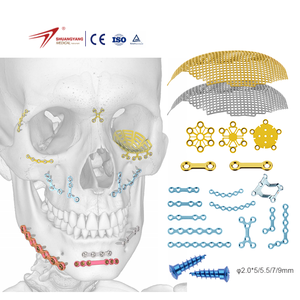
Neurosurgical cranioplasty and maxillofacial trauma call for customized, low-profile implants. Our CMF systems incorporate 3D malleable pure titanium mesh plates, micro-screws, and custom PEEK cranial implants engineered via patient CT scan data, allowing precise reconstruction of complex anatomical defects with optimal aesthetic and functional outcomes.
6. Veterinary Orthopaedic Fixation Hardware
Reflecting the rapid growth of advanced veterinary surgical care across Italy and Europe, our specialized veterinary range includes ISO 13485 certified titanium spinal rods, mini-locking plates, and external fixators engineered specifically for canine, feline, and equine orthopaedic procedures.
Localized Application Scenarios Across Italy's Healthcare Infrastructure
Understanding local clinical workflows is essential for successful medical device distribution in Italy:
- ASL Public Hospital Tenders: Italian regional public tenders prioritize cost-effectiveness backed by uncompromised safety records. Implants must feature standard metric surgical instrument compatibility, complete sterile packaging, and certified batch test reports.
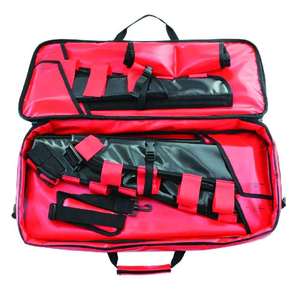
- Level-I Emergency Trauma Centers (CTS - Centri di Traumatologia ad Alta Specializzazione): High-volume emergency hospitals in cities like Milan, Rome, Turin, and Naples require rapid-response inventory replenishable within 24–48 hours. Consignment stocks of universal trauma plates, IM nails, and emergency fracture splint kits (such as the EVERISE multi-functional emergency kit) are essential.
- Specialized Orthopaedic Institutes (e.g., Istituto Ortopedico Rizzoli): World-renowned research and surgical centers require cutting-edge revision systems, custom 3D-printed titanium bone scaffolds, and specialized CMF cranioplasty meshes.
- Private Orthopaedic Clinics & Ambulatory Centers: Private surgical facilities favor low MOQ orders, pre-sterilized single-use kit configurations, and customized private-label implants that enhance clinical reputation and operational flexibility.
Strategic Trends Shaping the Italian Medical Device Market (2025–2030)
The Italian medtech landscape is undergoing key structural transformations:
1. EU MDR Regulatory Bottlenecks & Supply Chain Realignment: The stringent documentation requirements under EU MDR 2017/745 have created backlogs among traditional European Notified Bodies. Italian medical device brand owners and importers are increasingly partnering with established overseas manufacturing facilities that possess comprehensive technical documentation dossiers, validated test protocols, and robust quality management systems under ISO 13485.
2. PNRR Modernization Funds: Italy's Piano Nazionale di Ripresa e Resilienza (PNRR) is allocating billions of Euros into modernizing healthcare infrastructure, digital surgery, and hospital equipment. This capital influx is accelerating the adoption of advanced surgical instrumentation, high-precision power tools, and smart orthopaedic implants.
3. Growth in Additive Manufacturing & Patient-Specific Implants (PSI): Standard off-the-shelf implants are progressively complemented by 3D-printed porous titanium scaffolds for severe bone defect reconstruction, dynamic spinal stabilization, and complex oncological orthopaedic surgery.
Enterprise Advantage: Manufacturing Superiority & Distributor Support
As a premier global manufacturing partner for orthopaedic importers, distributors, and OEM brand owners, our manufacturing enterprise provides distinct operational advantages:
- 60,000 m² Advanced Manufacturing Campus: Houses cleanroom packaging facilities (ISO Class 7 / Class 10,000), automated washing lines, and modern environmental control systems.
- 450+ High-Precision Production Machines: Equipped with multi-axis CNC machine centers from Switzerland and Japan, yielding an daily output capacity of ~20,000 units to prevent inventory shortages.
- 70+ Dedicated R&D Engineers: Expert biomechanical engineers skilled in CAD/CAM design, finite element analysis (FEA), and rapid prototyping for custom OEM/ODM implant modifications.
- Low MOQ & Mixed-SKU Container Consolidation: Flexible ordering policies enable distributors to combine trauma plates, spinal screws, joint prostheses, and instrument sets in single shipments, lowering inventory holding costs for emerging market distributors.
- Turnkey Surgical Instrumentation: Every implant line is paired with ergonomically designed, color-coded stainless steel surgical instrument trays, ensuring seamless intraoperative usability for orthopaedic surgeons.
Frequently Asked Questions for Italian Importers & Buyers
Partner with a Premier Orthopaedic Manufacturing Exporter
Request complete product catalogs, technical dossiers, and OEM evaluation samples tailored for the Italian and European surgical market.