Technical Whitepaper: Biocompatibility Evaluation & Regulatory Conformance for Orthopedic Implants in Seoul
The South Korean medical device sector, anchored by the dense clinical ecosystem of the Greater Seoul Metropolitan Area, represents one of the most technologically demanding and strictly regulated healthcare markets in the Asia-Pacific region. As hospital networks such as Seoul National University Hospital (SNUH), Asan Medical Center, and Sinchon Severance elevate surgical benchmarks for trauma, spinal, and reconstructive procedures, local distributors and medical device importers face unprecedented scrutiny regarding orthopedic implant biocompatibility testing and regulatory documentation.
Navigating the requirements set forth by South Korea’s Ministry of Food and Drug Safety (MFDS) necessitates a rigorous scientific understanding of biomaterial interaction with bone microenvironments, mechanical fatigue kinetics, chemical extraction profiles, and surface passivation integrity. Ortix Medical Devices Co., Ltd. operates as a strategic manufacturing partner and exporter, delivering OEM/ODM orthopedic hardware engineered specifically to satisfy both global ISO 13485 / US FDA criteria and localized Seoul MFDS clearance protocols.
Information Gain Insight: The Seoul MFDS Biocompatibility Requirement
Under South Korea's updated Medical Device Act for Class III and Class IV permanent implants, chemical characterization (ISO 10993-18) and potentiodynamic polarization corrosion testing (ASTM F2129) are now evaluated alongside traditional cytotoxicity and systemic toxicity assays. Submitting comprehensive, lot-traceable testing reports drastically reduces approval lead times at Incheon Port and speeds up hospital procurement listing.
1. ISO 10993 & MFDS Biological Evaluation Standards for Implants
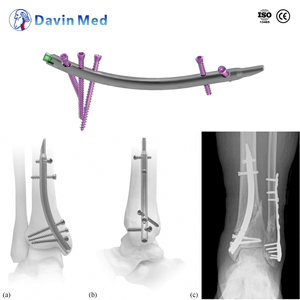
Biocompatibility is defined as the ability of a medical device or biomaterial to perform with an appropriate host response in a specific application. For load-bearing orthopedic implants—including proximal femoral intramedullary nails, distal tibia locking plates, and cervical interbody fusion cages—permanent contact with cortical and cancellous bone, blood, and peri-implant soft tissue demands a total biological evaluation matrix.
Our biocompatibility testing program follows the complete ISO 10993 series framework, validated through certified third-party testing laboratories and in-house analytical testing centers:
- ISO 10993-5 (Tests for In Vitro Cytotoxicity): Evaluates cellular response (L929 mouse fibroblasts) exposed to implant eluates over 24 to 72 hours. Qualitative and quantitative (MTT / XTT assay) evaluation ensures cellular viability exceeds 80%, confirming zero chemical leaching cytotoxicity.
- ISO 10993-10 & 10993-23 (Tests for Irritation and Skin Sensitization): Conducted using polar (saline) and non-polar (cottonseed oil) extracts via Murine Local Lymph Node Assay (LLNA) or Guinea Pig Maximization Test (GPMT) to guarantee zero delayed-type hypersensitivity.
- ISO 10993-11 (Tests for Systemic Toxicity): Evaluates acute, subacute, and chronic systemic effects. Ensures titanium alloy micro-particles or surface ions do not migrate to organ parenchyma or alter metabolic homeostasis over extended implantation spans.
- ISO 10993-3 (Tests for Genotoxicity, Carcinogenicity, and Reproductive Toxicity): Bacterial reverse mutation (Ames test) and chromosomal aberration assays ensure raw Ti6Al4V ELI titanium and PEEK-OPTIMA polymers are free from mutagenic threats.
- ISO 10993-6 (Tests for Local Effects After Implantation): Histopathological examination of decalcified bone tissue surrounding cortical screws and locking plates at 4, 12, and 26 weeks post-implantation, confirming healthy osteoblast apposition with negligible fibrous tissue encapsulation.
- ISO 10993-18 (Chemical Characterization of Materials): High-performance liquid chromatography (HPLC) and inductively coupled plasma mass spectrometry (ICP-MS) screen for volatile, semi-volatile, and heavy metal extractables.
2. Metallurgy, Surface Chemistry & Corrosion Kinetics
The mechanical performance and biological acceptance of orthopedic trauma plates, intramedullary rods, and maxillofacial systems depend heavily on raw material metallurgy and surface oxide passivation. Ortix Medical utilizes vacuum-arc remelted (VAR) Ti-6Al-4V ELI (Grade 23, ASTM F136) and medical-grade 316L Stainless Steel (ASTM F138) to eliminate micro-structural inclusions that trigger pitting or crevice corrosion.
Surface Passivation Science (ASTM F86 Protocols)
Untreated titanium alloys exposed to atmospheric conditions develop a thin, non-uniform oxide layer. To achieve optimum biocompatibility for the Seoul market, our 5-axis CNC machined implants undergo automated Type II Type III electrochemical anodization and nitric/citric acid chemical passivation compliant with ASTM F86 standards. This process forms a continuous, stoichiometric titanium dioxide ($\text{TiO}_2$) rutile/anatase protective layer measuring between 20 to 100 nanometers in thickness.
The stabilized $\text{TiO}_2$ passivated surface yields two vital clinical benefits:
- Corrosion Rate Suppression: Potentiodynamic polarization testing (ASTM F2129) in Hank's Balanced Salt Solution (HBSS) at physiological temperature (37°C, pH 7.4) demonstrates corrosion breakdown potentials ($E_{bd}$) exceeding +1.0 V, preventing the release of trace vanadium or aluminum ions into peri-implant fluid.
- Osseointegration Acceleration: The controlled surface micro-roughness ($Ra$ values between 1.8 μm and 2.5 μm) facilitates localized fibronectin adsorption, creating an optimal surface energy gradient that promotes human osteoblast cell attachment, spreading, and mineralized bone matrix deposition.
PEEK Polymers and Radiolucent Spinal Implants
For spinal interbody fusion cages and cranial reconstruction plates, polyetheretherketone (PEEK) provides an elastic modulus (~3.6 GPa) closely matching human cortical bone (~18 GPa), mitigating stress shielding effects. Our PEEK components undergo rigorous extractable testing under ISO 10993-18 to ensure zero unreacted monomers or processing aids remain within the matrix.
3. Seoul Medical Ecosystem & Localized Application Scenarios
Seoul’s medical infrastructure features a tier-one healthcare architecture where advanced surgical methodologies—such as minimally invasive surgery (MIS), robot-assisted spinal instrumentation, and digital intraoperative navigation—are standard practice. Ortix Medical manufactures product ranges adapted to specific surgical workflows across Seoul's specialized healthcare centers:
Trauma & Femoral Fixation (Gangnam & Songpa Emergency Centers)
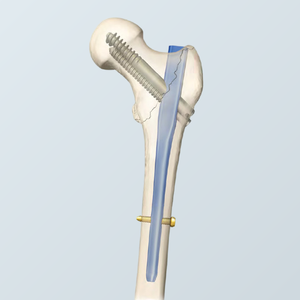
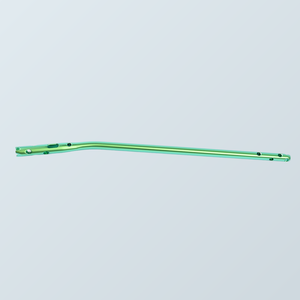
High-volume trauma centers handling complex pertrochanteric fractures require stable intramedullary constructs. Our Interlocking Intertan Femoral Nails feature dual lag screw technology designed to prevent the 'cut-out' effect in osteoporotic bone, supported by ergonomic, low-friction instrumentation sets ideal for rapid OR setup.
Spinal Fusion & Deformity Correction (Sinchon & SNUH Spine Units)
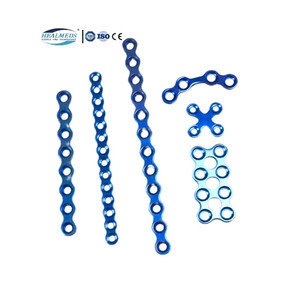
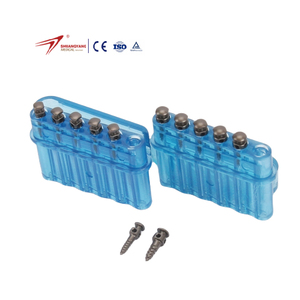
University hospitals in Seoul lead in cervical and thoracolumbar reconstruction. Our Anterior Cervical Plates and Thoracolumbar Pedicle Screw Systems feature low-profile plate geometry, self-tapping variable angle screws, and integrated locking mechanisms that suppress postoperative dysphagia and hardware loosening.
Digital Workflows & CMF Restoration (Gangnam Cosmetic & Maxillofacial Clinics)
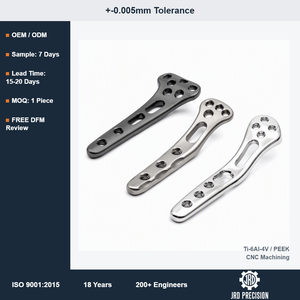
Seoul’s renown for cranio-maxillofacial (CMF) and corrective facial surgery requires extreme dimensional fidelity (±0.005mm). Our Titanium Maxillofacial Plates and digital Scan Bodies integrate seamlessly with CAD/CAM surgical planning, ensuring clean bone contact and zero soft-tissue irritation.
4. Strategic Trends Shaping the Orthopedic Supply Chain in South Korea
For medical equipment importers, tenders, and stocking distributors operating within South Korea, procurement dynamics are shifting toward suppliers capable of providing technical transparency and flexible logistics. Four macro trends currently define the Seoul market:
- MFDS Regulatory Harmonization with EU MDR: South Korea has aligned its technical file requirements closer to European Medical Device Regulation (MDR) standards. Importers can no longer rely on simple certificate of analysis (CoA) sheets; full biocompatibility, fatigue life (ASTM F1717 / ASTM F1264), and cleanroom sterilization validation reports (ISO 11137) are required.
- Demand for Mixed-SKU & Low MOQ Flexibility: Hospital inventory management models in Seoul emphasize fast turnover and lean inventory. Importers prefer partnering with manufacturers like Ortix Medical that offer mixed-SKU batch shipping rather than high minimum order quantity constraints.
- Growth of Bio-Active and 3D Printed Porous Structures: Advanced spine centers are transitioning toward 3D printed porous titanium cages featuring trabecular micro-structures ($500\text{--}700\,\mu\text{m}$ pore size) that encourage bone ingrowth directly through the implant matrix.
- Traceability and Laser UDI Marking: Unique Device Identification (UDI) laser marking is mandatory across Korean medical networks. Every screw, plate, and nail must feature high-contrast, non-degrading 2D DataMatrix codes for real-time surgical room tracking.
5. Corporate Advantages: Why Leading Korean Importers Partner with Ortix Medical
Ortix Medical Devices Co., Ltd. serves as an end-to-end original equipment manufacturer (OEM) and original design manufacturer (ODM) with an established export framework tailored to South Korea's stringent technical demands. Our core operational strengths include:
- Integrated Manufacturing Powerhouse: Operating out of a 60,000 m² production site equipped with over 450 precision 5-axis CNC machining centers (Citizen, Star, DMG Mori) and automated Coordinate Measuring Machines (CMM) achieving tolerances of ±0.005mm.
- Certified Cleanroom Packaging: Final cleaning, surface passivation, and primary pouch sealing occur inside ISO Class 7 (Class 10,000) cleanrooms, ensuring endotoxin levels fall well below the strict threshold of <0.25 EU/mL required for human surgical implantation.
- Rigorous In-House Laboratory Testing: Every lot undergoes strict dimensional verification, surface roughness profile scanning, pull-out force evaluation, dynamic fatigue testing, and elemental spectrographic verification.
- Complete OEM/ODM Private Labeling: Dedicated R&D team of 70+ engineers supporting Korean distributors with custom laser etching, customized IFU translation, specialized packaging, and custom surgical instrument tray design.