Precision Implants & Surgical Fixation Systems
Manufactured with laser-etched GS1 DataMatrix identifiers, ISO 13485 quality verification, and full raw material mill cert traceability for Hamburg healthcare procurement.
Navigating Implant Traceability & EU MDR Mandates in the Hamburg Healthcare Ecosystem
A Strategic Engineering Guide for Hospital Procurement Managers, Medical Device Importers, and OEM Partners in Northern Germany
1. Executive Regulatory Overview: The Traceability Imperative in Hamburg
The healthcare landscape in the Free and Hanseatic City of Hamburg—home to prestigious institutions such as the Universitätsklinikum Hamburg-Eppendorf (UKE), the Asklepios Kliniken Group, and specialized centers like the Schön Klinik Hamburg Eilbek—operates under some of the most rigorous medical device compliance standards in the European Union. Following the full operational enforcement of the European Medical Device Regulation (EU MDR 2017/745) and the German Medical Devices Law Implementation Act (Medizinprodukterecht-Durchführungsgesetz - MPDG), surgical implant traceability is no longer merely an operational preference; it is a strict legal directive.
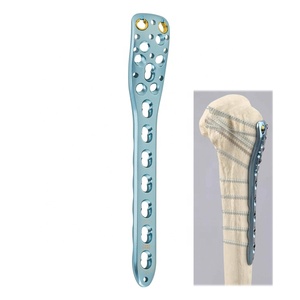
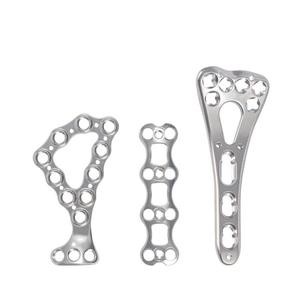
Article 27 of EU MDR mandates that every Class IIb and Class III surgical device—including spinal pedicle screws, total joint prostheses, osteosynthesis locking plates, and intramedullary nails—must carry a validated Unique Device Identification (UDI) system. For orthopedic OEM manufacturers supplying the Hamburg market, this requires a seamlessly integrated chain of custody from raw titanium ingot smelting through to intraoperative barcode scanning and automatic logging into hospital ERP platforms like SAP S/4HANA Healthcare and AGFA Orbis.
"In modern orthopedic surgery across Hamburg's trauma centers, complete traceability protects both patient and hospital. Every single screw, plate, and spinal rod must carry a verifiable digital history accessible within seconds, linking raw material melt batches directly to the intraoperative electronic medical record."
End-to-End Implant Traceability Architecture
How Ortix Medical implements a 6-stage quality verification pipeline to guarantee compliance from raw metal stock to Hamburg operating rooms.
1. Material Heat-Lot Verification
Every forging billet and raw bar stock (Grade 5 Eli Ti-6Al-4V per ASTM F136, 316LVM Stainless Steel per ASTM F186, or PEEK-OPTIMA) undergoes full optical emission spectrometry testing. Mill Test Certificates (EN 10204 3.1) are permanently cross-linked to the raw material heat number.
2. Zero-Corrosion Picosecond Laser DPM
Implants receive direct micro-laser marking using ultrashort picosecond laser pulses. This technique alters the surface oxide layer to form high-contrast GS1 2D DataMatrix codes without creating micro-cracks or heat-affected zones that could compromise fatigue life during cyclic mechanical loads.
3. Automated Vision Code Verification
Post-anodization and passivation (per ASTM F86), 100% of direct part markings are evaluated via automated vision systems under ISO/IEC 15415 2D barcode quality standards. Only markings scoring Grade A or B clarity are released for cleanroom washing.
4. Cleanroom Assembly & Primary Packaging
Implants are washed in multi-stage ultrasonic deionized water baths and packed in ISO Class 7 cleanrooms. Sterile barrier packaging (ISO 11607) incorporates outer peel-open Tyvek pouches carrying human-readable and GS1-128 linear barcode tags.
5. EUDAMED & UDI-DI Database Integration
Device data attributes—including Basic UDI-DI, risk class, shelf life, and sterilization mode (Gamma / ETO)—are synchronized with EUDAMED (European Database on Medical Devices) to streamline regulatory audits by Hamburg's health authority (BGV Hamburg).
6. Intraoperative Hospital Inventory Scanning
During surgical procedures in Hamburg operating suites, circulating nurses scan the 2D DataMatrix code directly into the hospital inventory software, immediately deducting the implant from stock while binding its lot serial number to the patient’s file.
Implant Traceability & Manufacturing Quality Comparison
Comparing legacy manual batch tracking against Ortix Medical's automated digital traceability system engineered for German health regulations.
| Traceability & Quality Parameters | Legacy Batch Identification | Ortix Medical UDI Direct Marking | Hamburg Clinical Compliance Standard |
|---|---|---|---|
| UDI Code Architecture | Outer box sticker only | ✓ Micro 2D DataMatrix on Implant | Mandatory under EU MDR Art. 27 |
| Laser Marking Durability | Fades after 5-10 autoclave cycles | ✓ Passivated Zero-Corrosion (100+ cycles) | DIN EN ISO 17664 Validation |
| Raw Material Certificate | Manual paper file per lot | ✓ Instant QR/Cloud Mill Cert Tracking | EN 10204 3.1 Digital Record |
| Bar Code Readability Score | ISO 15415 Grade C / D | ✓ ISO 15415 Grade A / B Verified | High-speed Scanner Compatibility |
| EUDAMED Attribute Sync | Manual periodic submission | ✓ Automated API Synchronized | Required for Class IIb/III Devices |
| Customs & Port Clearance | 3-5 Days document inspection | ✓ Pre-validated Hamburg Port Logistics | Seamless Fast-Track Import |
Clinical Applications & Market Trends in Hamburg
Tailored solutions meeting the operational demands of Northern Germany's trauma networks, university research hospitals, and regional medical distributors.
Local Clinical Application Scenarios
In the fast-paced surgical suites of Hamburg’s level-1 trauma centers (such as UKE Eppendorf and Asklepios Klinik St. Georg), surgical staff manage high volumes of polytrauma, complex revision spinal surgeries, and delicate reconstructive procedures. Ortix Medical's micro-etched implants and color-coded surgical instruments allow perioperative nurses to verify implant sizes, thread profiles, and batch numbers instantly via optical scanners prior to passing instruments to the surgeon.
Furthermore, in specialized elective clinics like the Schön Klinik Hamburg Eilbek, detailed traceability reports streamline device tracking for joint arthroplasty and spinal fusion patients, giving surgical teams total confidence in long-term implant biocompatibility and construct stability.
Northern Germany Procurement & Supply Chain Trends
- Automated Hospital Inventory Logistics: German hospitals are transitioning to automated RFID and 2D DataMatrix scanning to automate replenishment and eliminate manual entry errors in operating theaters.
- Supply Chain Resilience via Direct Port Access: Hamburg’s position as a major European logistics capital (Hafen Hamburg) enables medical distributors to leverage direct maritime and air-freight consolidation from our manufacturing hub.
- Heightened Regulatory Oversight: The Hamburg Health Authority (Behörde für Arbeit, Gesundheit, Soziales, Familie und Integration - BAGSFI) enforces strict post-market surveillance (PMS) and vigilance reporting, requiring zero gap in device lot history.
- Demand for OEM/ODM Private Labeling: Local German medical brands increasingly seek experienced manufacturing partners who can produce custom-branded implants with pre-verified CE and EUDAMED documentation packages.
Why Leading European Medical Brands Partner with Ortix Medical
Advanced Manufacturing Fleet
Our 60,000 m² state-of-the-art facility is equipped with over 450 precision multi-axis CNC machines (including Swiss-type turning lathe centers and 5-axis DMG Mori milling machines) engineered for tight-tolerance medical components.
In-House Engineering R&D
With a team of 70+ dedicated biomechanical engineers, we support rapid prototyping, custom implant drawing modification, biomechanical finite element analysis (FEA), and complete ODM system development.
ISO 17025 Certified Testing Lab
Every implant design undergoes rigorous mechanical testing—including axial pull-out, static torsion, and dynamic fatigue testing under ASTM F543 and ISO 14801 standards—to ensure absolute clinical reliability.
Frequently Asked Questions for Hamburg Medical Buyers
Detailed answers for hospital purchasing agents, regulatory officers, and OEM partners in Germany.
How does Ortix Medical comply with the EU MDR 2017/745 UDI requirements for Hamburg importers?
Ortix Medical fully integrates UDI compliance into our manufacturing workflow. Every implant is assigned a Basic UDI-DI (for product family registration in EUDAMED) and a UDI-PI (which encodes production batch numbers, manufacture dates, and expiration dates). The physical implants carry direct laser-etched GS1 2D DataMatrix codes verified under ISO/IEC 15415, while outer secondary packaging contains human-readable and GS1-128 linear barcodes compatible with German hospital scanning infrastructure.
What quality documentation and material certificates accompany shipments to Germany?
All shipments include comprehensive documentation packages required by German health authorities and notified bodies. This includes ISO 13485:2016 quality certificates, EN 10204 3.1 raw material mill certificates (detailing chemical composition and mechanical tensile properties), ISO 10993 cytotoxicity and biocompatibility test reports, chemical passivation certificates (ASTM F86), and double-sterile barrier validation logs (ISO 11607).
Does laser direct part marking (DPM) affect the corrosion resistance or strength of titanium screws?
No. Ortix Medical employs state-of-the-art picosecond/femtosecond laser marking systems operating at cold-ablation thermal parameters. Unlike standard thermal fiber lasers that cause micro-fissuring and local metal melting, our process alters only the surface titanium dioxide passivation layer without inducing micro-cracks or heat-affected zones (HAZ). Biomechanical fatigue testing under ASTM F543 confirms zero reduction in torsional strength or fatigue life.
What is the minimum order quantity (MOQ) and lead time for shipments to Hamburg?
To support agile inventory management for distributors and regional hospital groups, we offer flexible low MOQ options on standardized catalog SKUs, allowing mixed-item orders (combining bone screws, locking plates, intramedullary nails, and instrument sets). Standard stock SKUs can be dispatched via air freight to Hamburg Airport (HAM) or maritime container to the Port of Hamburg (Hafen Hamburg) within 7–14 days. OEM/ODM custom orders follow an agreed production schedule.
Can Ortix Medical support OEM private labeling and custom surgical instrument design?
Yes. Our OEM/ODM service includes custom brand laser logo marking, customized surgical instrument tray design, custom color anodization, and specialized packaging tailored to your brand's regulatory file. Our engineering team collaborates directly with your CAD models or physical samples to deliver fully certified finished devices ready for market distribution.
How are surgical instrument sets organized to ensure intraoperative traceability?
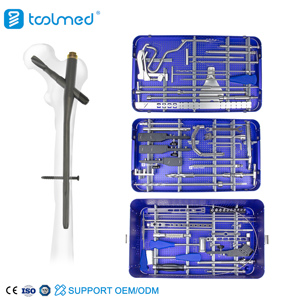
Our modular surgical instrument trays feature laser-etched dimension matrices, color-coded anodization, and serial-numbered tray layouts. Each driver, tap, bender, and measuring gauge is laser-marked with a unique SKU and batch identifier, allowing central sterile supply departments (CSSD / AEMP) in German hospitals to perform rapid inventory audits and complete tracking across sterilization cycles.
Partner with a Certified Orthopedic Implant Manufacturer
Request technical specifications, sample UDI marking validation reports, or discuss your private label OEM requirements with our European export engineering team today.
Inquire Now