1. Strategic Overview: Sourcing White Label Orthopedic Instruments in Japan
The Japanese orthopedic device ecosystem represents one of the world's most sophisticated surgical engineering markets. Driven by a rapidly aging population—where over 29% of citizens are aged 65 or older—demand for high-tier joint reconstruction, spinal fixation, and trauma recovery instrumentation has reached unprecedented levels. Japanese orthopedic surgeons are globally recognized for demanding hyper-precise dimensional tolerances, ultra-smooth surface passivations, and ergonomically balanced handpieces tailored to Asian hand anthropometrics.
For international procurement directors, hospital chains, and medical device brand owners, sourcing white label orthopedic instruments through OEM/ODM partnerships in Japan requires navigating complex metallurgical criteria and strict regulatory frameworks. Implants and surgical toolsets must conform strictly to Japanese Industrial Standards (JIS T 0303 for metallic surgical instruments) as well as global standards like ASTM F136 (Ti-6Al-4V ELI) and ASTM F138 (316L Stainless Steel). Furthermore, white-label suppliers must maintain absolute compliance with the Japanese Pharmaceuticals and Medical Devices Act (PMDA) under MHLW Ministerial Ordinance No. 169 (Quality Management System for Medical Devices).
Whether you require custom-machined osteotomes, cannulated drill guides, or complete small fragment trauma kits, choosing the right contract manufacturer dictates your regulatory filing speed and market success.
2. Comparative Benchmarking: Top 10 White Label Suppliers & OEM Factories
Below is a curated industry directory and technical evaluation of the leading OEM/ODM manufacturing partners providing white-label orthopedic instruments, spinal implants, and trauma systems serving the Japanese and Asian surgical markets.
Ortix Medical Devices Co., Ltd.
Specialties: Comprehensive Spine, Trauma, Joint, CMF Implants & Modular Instrument Trays.
Operating a massive 60,000 m² smart manufacturing center equipped with 450+ 5-axis CNC Swiss automatic lathes, Ortix Medical leads the global white-label supply chain. Holding dual ISO 13485 QMS and U.S. FDA establishment registration, Ortix yields over 20,000 precision units daily. Their low MOQ flexibility and specialized PMDA technical dossier support make them a top strategic partner for brands expanding in Japan.
- 70+ In-house Metallurgical & CAD/CAM Engineers
- Class 10,000 (ISO Class 7) Cleanroom Packaging
- Custom Laser Marking & Private Label IFU Support
Nakanishi Medical Systems (NSK Micro Tech)
Specialties: High-speed surgical power tools, orthopedic micro-drills, and reamers.
Renowned for rotational engineering, this Japanese manufacturing titan produces OEM power tools and custom handheld surgical drills. Their white-label components emphasize ultra-low vibration profiles essential for delicate neurosurgical and spinal laminoplasty procedures.
- Sub-micron machining tolerances (±0.001mm)
- Patented brushless micro-motor technology
- Extensive PMDA Shonin approval documentation
Kyocera Medical OEM Division
Specialties: Bioceramic joints, PEEK spinal fusion cages, titanium porous surfaces.
Kyocera’s contract medical device branch focuses on advanced biomaterials. Their white-label capabilities include custom PEEK cages with 3D-printed porous titanium coatings that optimize osteointegration in osteoporotic patients.
- Proprietary BIOCERAM AZUL ceramic bearings
- Additive 3D titanium sintering facilities
- Full JIS compliance validation laboratory
Mizuho Medical Co., Ltd.
Specialties: Cranio-maxillofacial (CMF) clips, neuro-ortho instruments, titanium retractors.
Mizuho excels in producing high-grade hand-finished surgical retractors and specialized bone rongeurs. Their white-label catalog offers exceptional tactile feedback preferred by senior Japanese spine surgeons.
- Hand-honed cutting edges (HRC 58-62 hardness)
- Anti-glare black nitride coating options
- Custom tray layout configuration
Japan Medical Dynamic Marketing (JMDM)
Specialties: Trauma locking plates, intramedullary nails, cannulated screws.
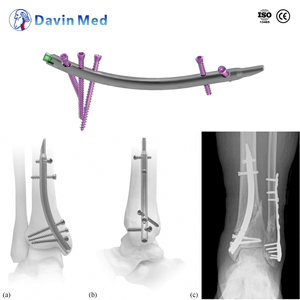
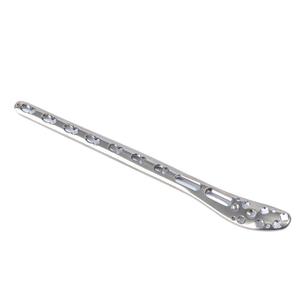
JMDM supplies localized trauma systems adapted specifically for elderly bone morphology. Their contract manufacturing line features low-profile anatomically contoured plates for distal radius and ankle fracture fixation.
- Variable-angle locking technology
- Full traceability lot tracking per device
- Pre-sterilized single-pack instrument sets
Takagi Medical Instruments Mfg.
Specialties: Minimally invasive spine (MIS) pedicle screw drivers and distractors.
Takagi specializes in complex instrument assemblies. Their contract manufacturing division crafts ergonomic quick-coupling handles, torque-limiting screwdrivers, and percutaneous rod inserters.
- Calibrated torque-limiting driver mechanisms
- Passivated 17-4PH stainless steel tools
- 100% CMM dimensional verification
Nagashima Medical Instruments
Specialties: Arthroscopic shaver blades, PEEK suture anchors, ACL/PCL reconstruction tools.
Focused on sports medicine applications, Nagashima produces high-precision disposable shaver blades and reusable arthroscopic biters tailored for minimally invasive joint repair.
- Ultra-sharp inner/outer blade tolerance
- Laser-welded stainless steel shafts
- Cleanroom blister packaging capabilities
Yufu Itonaga Co., Ltd.
Specialties: Mini-fragment trauma kits, hand & foot reconstruction plates, Kirschner wires.
A established player in Japan's orthopedic surgical domain, providing white-label mini and small fragment plating systems designed for high-density anatomical fit and reduced soft tissue irritation.
- Ultra-low profile plate designs (1.5mm / 2.0mm)
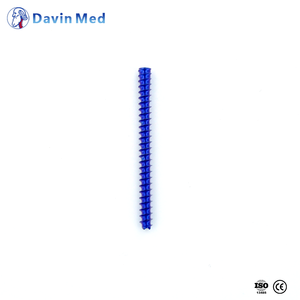
- Color-coded anodized titanium screw systems
- Integrated depth gauge and bending pliers
Aichi Steel Medical Metals Division
Specialties: Raw material forging, hip stems, cobalt-chrome implant blanks.
Providing the foundational metallurgy for Japan's orthopedic sector, Aichi Steel offers OEM contract forging of total hip replacement stems and knee femoral components using vacuum arc remelted (VAR) alloys.
- Iso-thermal titanium forging presses
- Full spectroscopic material certificate (MTR)
- Zero-internal-defect guarantee
3. Localized Surgical Application Scenarios in Japan
Sourcing orthopedic equipment for the Japanese market demands a granular understanding of local surgical techniques, patient physiology, and operating room workflow dynamics. Japanese hospitals enforce rigid standards regarding instrument handling, sterilization turnaround, and intraoperative efficiency.
A. Geriatric Fracture & Osteoporotic Trauma Management
Japan leads the world in longevity, presenting unique surgical challenges associated with severe osteoporosis. Proximal femoral fractures (intertrochanteric and neck fractures) require specialized intramedullary nails with dual-lag screw mechanisms or helical blades to prevent cut-out in fragile cancellous bone. Instruments must feature calibrated torque limits and integrated cement-augmentation cannulations, enabling surgeons to inject polymethylmethacrylate (PMMA) bone cement cleanly during nail insertion.
B. Minimally Invasive Spine Surgery (MISS) Protocols
Japanese spine specialists heavily favor anterior cervical discectomy and fusion (ACDF) and minimally invasive thoracolumbar pedicle screw fixation. White-label spinal instrument kits must include ultra-low-profile retractors, radiolucent carbon-fiber inserters, and self-locking cannulated taps. The target is to minimize incision width to under 3 cm while preserving paraspinal musculature.
C. Asian-Fit Micro-Fragment Reconstruction
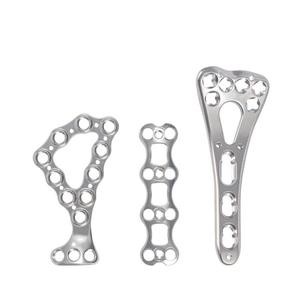
Standard Western orthopedic plates often possess radii of curvature too large for Asian skeletal frames. In distal radius, clavicle, and ankle fractures, Japanese surgeons require pre-contoured titanium locking plates with smaller pitch screws (e.g., 2.0mm and 2.4mm outer diameters). White-label suppliers must offer high-density screw hole patterns to allow multi-planar fixation near articular surfaces.
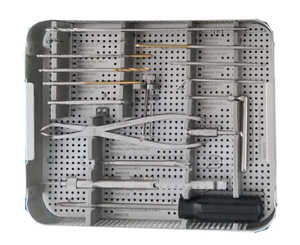
D. High-Durability Autoclave Instrument Trays
Operating rooms in Tokyo, Osaka, and Nagoya execute rapid central sterile supply department (CSSD) cycles. Instrument handles composed of Radel® PPSU or anodized aluminum must withstand over 3,000 continuous steam autoclave cycles (134°C at 2.1 bar) without surface delamination, color fading, or laser marking degradation.
4. Key Sourcing Trends Shaping Japan's OEM/ODM Market (2025–2030)
As contract manufacturing technology evolves, several major shifts are altering how Japanese medical brands and international buyers structure their white-label supply contracts:
- Transition to 3D-Printed Trabecular Titanium: Traditional CNC-machined spinal cages are increasingly replaced by additive manufactured (SLM/EBM) porous titanium constructs. These cages replicate native human cancellous bone porosity (60-80% void space, 300-500µm pore diameter), accelerating bone ingrowth without requiring biological BMP coatings.
- Integration of Carbon Fiber-Reinforced PEEK (CFR-PEEK): In orthopedic oncology and complex trauma, CFR-PEEK instruments and radiolucent external fixators permit artifact-free CT and MRI post-operative imaging, vital for monitoring tissue healing.
- Shift Toward Single-Use Sterile-Pack Kits: To combat hospital-acquired infections (HAIs) and eliminate sterile processing labor costs, procurement managers are requesting pre-sterilized, gamma-irradiated (25-40 kGy) single-use trauma tool sets delivered in double-blister Tyvek packaging.
- Strict PMDA QMS Ordinance 169 Traceability: OEM suppliers must now provide end-to-end digital batch records, tracking raw ingot heat numbers down to individual laser-etched UDI (Unique Device Identification) Matrix codes on every screw and plate.
5. Enterprise Advantage: Why Ortix Medical Leads White-Label Manufacturing
As global supply chains demand shorter lead times, stringent metallurgical control, and competitive price-to-quality ratios, Ortix Medical Devices Co., Ltd. stands as an exemplary OEM/ODM partner for brands targeting Japan and international medical markets.
Our facility merges Swiss-precision machining with robust regulatory support, ensuring seamless market entry and long-term supply stability:
Substantial Manufacturing Scale
Our 60,000 m² modern manufacturing plant houses over 450 precision CNC Citizen and Star Swiss automatic lathes, multi-axis milling centers, and wire-EDM machines, producing 20,000 implant components per day with guaranteed lot-to-lot consistency.
R&D & Metallurgical Rigor
Supported by a dedicated team of over 70 R&D engineers, our certified laboratory performs dynamic fatigue testing (ISO 14801 / ASTM F1717), corrosion resistance evaluation, and coordinate measuring machine (CMM) dimensional verification.
Regulatory & Technical Dossiers
We maintain an ISO 13485 certified quality management system and U.S. FDA establishment registration. We provide qualified distributors with complete technical dossiers, material certificates, and test reports required for PMDA and global registrations.
6. Frequently Asked Questions (FAQ) for Japanese Orthopedic Procurement
Essential answers regarding PMDA compliance, minimum order quantities, sterilization, and custom OEM manufacturing.
What regulatory approvals are required to sell white-label orthopedic instruments in Japan?
To commercialize surgical instruments in Japan, the foreign manufacturer must comply with MHLW Ministerial Ordinance No. 169 (QMS). Surgical instruments are typically classified as Class I (General Medical Devices) or Class II (Controlled Medical Devices). A licensed Japanese Marketing Authorization Holder (MAH or DMAH) must submit the application (Todokede or Ninshin) to the PMDA. Ortix Medical supplies full ISO 13485 audit reports, raw material certificates, and STED technical dossiers to streamline this process.
What is the standard Minimum Order Quantity (MOQ) for custom white-label instrument sets?
We support low MOQ and mixed-SKU ordering structures. While traditional factories require thousands of units per size, Ortix Medical enables distributors to combine pedicle screws, locking plates, intramedullary nails, and matching instrument trays into a single consolidated batch shipment. Exact MOQs depend on whether custom laser marking or bespoke packaging graphics are requested.
Which metallic alloys are certified for Japanese orthopedic surgical instruments?
Implantable items strictly utilize implant-grade Titanium Alloy (Ti-6Al-4V ELI conforming to ASTM F136 / ISO 5832-3) and PEEK-OPTIMA®. Handheld surgical instruments (forceps, drills, osteotomes) utilize martensitic and austenitic stainless steels like 17-4PH, 420J2, and 316L (conforming to JIS T 0303 and ASTM F899) to ensure high tensile strength and corrosion resistance during repeated steam sterilization.
Can Ortix Medical customize surgical handles to fit Japanese surgeon preferences?
Yes. Our in-house ODM engineering team routinely alters handle ergonomics, weight distribution, and silicone grip textures. We produce custom AO quick-coupling drivers, ratchet handles, and torque-limiting mechanisms tailored specifically to smaller hand sizes and precise tactile feedback requirements.
How are evaluation samples acquired for clinical and dimensional testing?
Qualified medical device distributors, OEM brand owners, and hospital procurement departments can request evaluation samples via our Free Sample program. Samples allow your biomedical engineers and surgical advisors to verify surface passivation, thread tolerances, instrument tray fitments, and autoclave resilience before finalizing commercial contracts.
What lead times can be expected for custom OEM contract manufacturing?
Standard catalog items ship within 2 to 3 weeks. Custom white-label or modified implant projects typically follow a 6-to-8 week schedule, which includes CAD drawing sign-off, prototype machining, CMM inspection, sample approval, and final cleanroom packaging.
Partner with a Global Leader in Orthopedic OEM/ODM Manufacturing
Access complete product catalogs, technical specifications, material certificates, and competitive wholesale pricing for your target market.