1. Executive Summary: The Structural Shift in Russia's Orthopedic Implant Supply Chain
The Russian medical device market is undergoing a profound structural transformation. Historically dependent on Western European and North American Original Equipment Manufacturers (OEMs) for premium spine, trauma, and craniomaxillofacial (CMF) implants, Russian healthcare procurement managers, state surgical centers, and private distributor networks face an urgent imperative to secure reliable, top-tier alternatives. The key challenge lies in substituting legacy Western hardware with implants that maintain uncompromised mechanical integrity, strict biological compatibility, and full alignment with international quality frameworks like EU MDR 2017/745 and ISO 13485:2016.
Leading Chinese orthopedic manufacturing facilities have established themselves as strategic partners for the Russian market. Far from being low-cost, low-spec suppliers, Tier-1 Chinese factories leverage ultra-precision Swiss-type lathe turning, 5-axis DMG MORI CNC milling, cleanroom titanium anodization, and rigorous fatigue testing protocol (ISO 12189 / ASTM F2193). This whitepaper provides Russian B2B medical buyers with an exhaustive technical evaluation of Chinese MDR 2017/745 certified orthopedic implants, analyzing biomechanical applications, Roszdravnadzor (RZN) registration pathways, localized trauma dynamics, and industrial OEM/ODM capabilities.
2. Market Trends & Regulatory Alignment in the Russian Federation
Navigating medical device procurement in Russia requires a sophisticated understanding of both clinical demand patterns and regulatory compliance under the Federal Service for Surveillance in Healthcare (Roszdravnadzor). The convergence of geopolitical realignments, the Eurasian Economic Union (EAEU) unified medical market regulations, and internal Russian healthcare modernization directives has reshaped procurement priorities.
2.1 Roszdravnadzor (RZN) Technical File Synchronization with EU MDR 2017/745
One of the most significant advantages of sourcing from Chinese factories with established EU MDR 2017/745 compliance is the seamless transition to Roszdravnadzor registration dossiers. Under current RZN regulations for Class IIa, IIb, and Class III medical devices (including implantable spinal systems, total joint prostheses, and trauma locking plates), the technical dossier must contain exhaustive evidence of risk management (ISO 14971), clinical evaluation reports (CER), cleanroom validation (ISO 14644 Class 7/8), and biological evaluation (ISO 10993 series).
Chinese manufacturers certified under MDR 2017/745 possess fully structured STED (Summary Technical Documentation) packages, comprehensive Notified Body test protocols, and material certification (ASTM F136 Ti-6Al-4V ELI / ASTM F138 316L Stainless Steel). This documentation drastically reduces the turnaround time for Russian importers during laboratory bench testing and clinical trials conducted at certified Russian institutes prior to RZN registration certificate issuance.
2.2 Climate-Induced & Regional Application Dynamics in Russia
The Russian Federation's vast geographic footprint presents unique clinical and biomechanical challenges:
- Winter Trauma Peaks (Severe Orthopedic Impact): From November to April, sub-zero weather conditions across Siberia, the Urals, and the Central Federal District lead to a massive surge in distal radius, proximal humerus, ankle, and hip fractures. Regional trauma centers demand high-capacity stocking of anatomical locking compression plates (LCP) and cannulated screws capable of supporting acute surgical loads.
- High-Energy Trauma Infrastructure: Major transit arteries and industrial centers experience high-energy polytrauma cases requiring rapid external fixation (AO Synthes type modular fixators), followed by conversion to intramedullary nail systems (PFNA, tibial, and femoral nails).
- Degenerative Spinal Pathology: An aging demographic in urban centers like Moscow, St. Petersburg, Novosibirsk, and Yekaterinburg drives high demand for cervical anterior fusion (ACDF), thoracolumbar pedicle screw-rod constructs, and PEEK interbody fusion cages.
3. Technical Benchmarking: Chinese MDR Factories vs. Legacy Western Suppliers
To quantify the strategic benefits for Russian distributors, the following matrix compares the technological, operational, and regulatory parameters of leading Chinese MDR-compliant orthopedic factories against traditional Western manufacturers:
| Evaluation Parameter | Tier-1 Chinese MDR Factory | Legacy Western Suppliers | Russian Market Strategic Benefit |
|---|---|---|---|
| Quality Certification | EU MDR 2017/745, ISO 13485, US FDA Registered | EU MDR 2017/745, US FDA 510(k) | Guaranteed clinical equivalence; streamlined RZN registration dossier submission. |
| Raw Material Origin | Biomedical Titanium (ASTM F136 ELI), PEEK (Optima), 316L (ASTM F138) | Biomedical Titanium (ASTM F136), PEEK, 316L | 100% metallurgical purity matching Western tensile and yield strength standards. |
| Machining Precision | Swiss-type 5-Axis CNC Lathes (Tolerance ±0.005mm) | 5-Axis CNC Lathes (Tolerance ±0.005mm) | Flawless thread engagement, zero intraoperative burring or driver stripping. |
| Supply Chain Resilience | Vertical Integration (Raw Bar to Sterilized Packaging) | Complex Multi-tier Global Subcontracting | Unaffected by Western export restrictions; direct overland rail (Chongqing-Moscow) delivery. |
| MOQ & Order Flexibility | Low MOQ, Mixed-SKU Batch Orders Supported | High Volume Contracts, Rigid Minimum Orders | Prevents inventory capital tie-up for Russian regional distributors stocking rare sizes. |
| Financial Settlement | Direct Yuan (RMB) / Ruble (RUB) Payment Channels | USD / EUR restricted mechanisms | Completely bypasses SWIFT blockades; eliminates currency exchange volatility. |
4. Deep-Dive Product Categories & Clinical Application Scenarios
4.1 Thoracolumbar & Cervical Spinal Fixation Systems
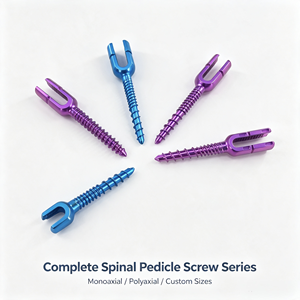
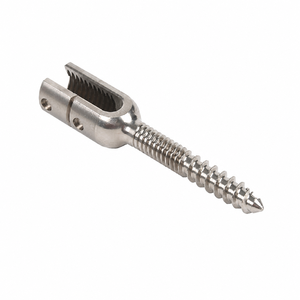
Spinal surgeries demand the highest degree of biomechanical stability. Modern Chinese pedicle screw systems utilize top-loading, dual-thread polyaxial screws designed to reduce insertion torque while increasing pull-out resistance in both osteoporotic and high-density bone. The integration of friction-head polyaxial designs allows for an articulation angle up to 52 degrees, facilitating rod placement in complex scoliosis or spondylolisthesis corrections.
Clinical Focus - Polyaxial Pedicle Screws & Rods: Manufactured from medical-grade Titanium Alloy (Ti-6Al-4V ELI), these implants undergo micro-arc oxidation surface treatment to enhance fatigue strength. The thread pitch is optimized for cortical-cancellous bone purchase, preventing late postoperative instrument loosening under heavy biomechanical loads.
4.2 Trauma Internal & External Fixation Technologies
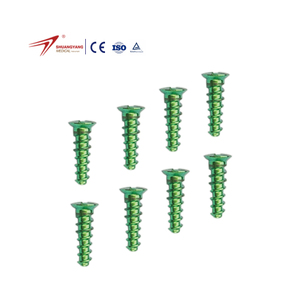
Internal fixation systems supplied to the Russian market feature anatomical locking compression plates (LCP) contoured to match bone geometry, reducing the need for intraoperative plate bending. Combined with self-tapping locking screws, these constructs establish fixed-angle stability crucial for osteopenic bone fractures.
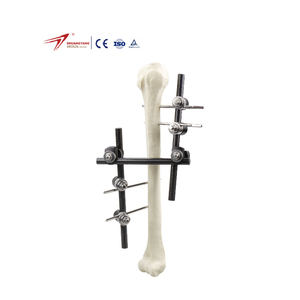
For acute open fractures and emergency polytrauma, the AO Synthes Type External Fixator System offers modular aluminum-alloy rods and stainless steel Schanz screws. The lightweight design provides rigid construct stabilization in emergency field units, military hospitals, and regional trauma centers prior to definitive internal fixation.
4.3 Craniomaxillofacial (CMF) & Neurosurgical Micro-Plating
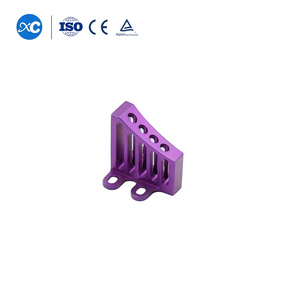
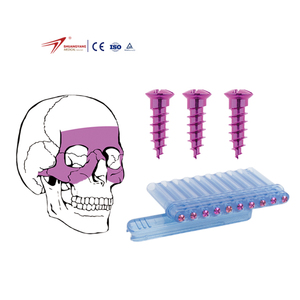
Reconstructive skull surgery and maxillofacial trauma require ultra-low profile implants to prevent soft-tissue irritation and skin breakdown. Self-drilling 1.5mm and 1.8mm titanium micro-screws and flexible mesh plating systems enable precise anatomical restoration following oncological resection or traumatic skull fractures. The implants are cold-worked to maintain malleable contourability without sacrificing yield strength under dynamic masticatory or intracranial mechanical forces.
4.4 Specialized Dental Surgical Motors & Veterinary Orthopedics
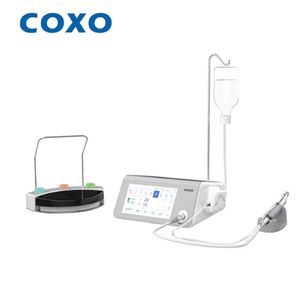
Diversified Chinese manufacturers also lead in specialized surgical power units and veterinary implants. Systems such as the COXO C-Sailor Pro+ integrate real-time torque monitoring, brushless Swiss motors, and multi-stage irrigation, enabling dentists and oral surgeons to perform delicate implantology procedures with high precision. Furthermore, veterinary trauma implants—such as Titanium TTA (Tibial Tuberosity Advancement) systems—cater to Russia's expanding veterinary surgical clinic network, offering identical metallurgical and manufacturing quality to human medical devices.
Connect with Our Russian Export Engineering Team
Request full product catalogs, ISO 13485 & EU MDR 2017/745 certificate packages, RZN registration documentation support, or evaluation samples for clinical trial testing in Russia.
Send an Inquiry5. Enterprise Manufacturing Infrastructure & Quality Control Protocol
A certified China Tier-1 orthopedic supplier operates as a high-technology manufacturing hub. The facility features over 60,000 square meters of production area equipped with 450+ high-precision machining centers. To guarantee absolute compliance with international regulatory bodies, quality control spans every stage of manufacturing:
1. Raw Material Verification
100% spectral analysis and ultrasonic flaw detection on incoming titanium bars (ASTM F136) and PEEK rods (Invibio Optima) to rule out internal voids or impurities.
2. Precision CNC Machining
Multi-axis Citizen and Star Swiss lathes execute single-pass turning of intricate threads, polyaxial screw heads, and complex locking plate geometries within ±5 microns.
3. Surface Treatment & Cleanroom
Automated Type II color anodization and passivation followed by ultrasonic cleaning and packaging inside ISO Class 7 (Class 10,000) cleanrooms.
Every single batch of implants is assigned a unique Laser UDI (Unique Device Identification) code compliant with EU MDR and Roszdravnadzor electronic tracking requirements. Full lot traceability connects the finished, double-sterile barrier blister package back to the specific raw material melt heat number, CNC operator machine log, and bioburden validation report.
6. Frequently Asked Questions (FAQ) for Russian B2B Procurement Managers
7. Strategic Roadmap for Russian Distributors Sourcing from China
Establishing a resilient, profitable orthopedic supply chain from China involves a systematic four-step protocol:
- Dossier Audit & Sample Verification: Review the manufacturer's ISO 13485, MDR 2017/745, and material test certificates. Request physical samples to test screw driver fit, plate finish, and tray ergonomics.
- Commercial Agreement & Currency Locking: Fix pricing in Chinese Yuan (CNY) under long-term supply agreements to mitigate exchange rate fluctuations and protect profit margins on regional hospital tenders.
- RZN Registration Fast-Tracking: Utilize the manufacturer's pre-compiled STED technical file to submit registration applications to Roszdravnadzor, utilizing accredited Russian toxicological and technical testing centers.
- Buffer Stock Management: Establish a rolling 90-day regional inventory buffer in Moscow or regional hub logistics centers to handle unexpected seasonal surges in trauma and emergency surgery cases.
By partnering with a verified China MDR 2017/745 orthopedic manufacturer, Russian healthcare providers secure high-performance surgical products, immune to geopolitical disruptions, while enhancing clinical outcomes across the Russian Federation.