High-Precision Biocompatible Orthopedic & Surgical Systems
Engineered for surgical excellence in Doha: Comprehensive orthopedic implants, veterinary fixations, and power systems tested for cytotoxicity, wear resistance, and long-term bio-integration.
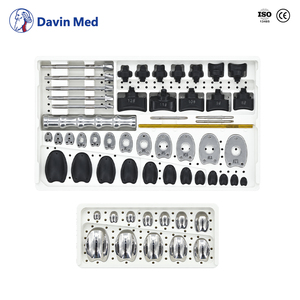
Davin Med Animal Implant Veterinary Orthopedic Hip Replacement System For Canine Severe Patellar Luxation & Trochlear Dysplasia
Ultra-high molecular weight polyethylene (UHMWPE) cup and Ti-6Al-4V stem optimized for veterinary joint reconstruction with zero cytotoxic reaction.
Contact Us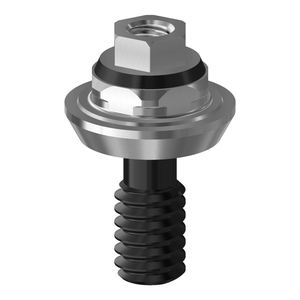
Dental Implant Compatible Parts Internal Connection Titanium Healing Abutment Scan Post Crown Restoration Multi-Platform
Grade 5 Eli Titanium internal connection abutments with micro-grooved bio-reactive surfaces for oral mucosal cell attachment and osteointegration.
Contact Us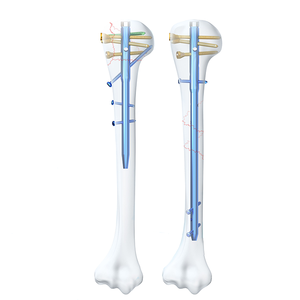
Geasure Stock Orthopedic Surgical Humeral Nail For Osteoporotic Bone Fixation Medical Orthopedic
Multi-planar locking intramedullary humeral nail designed for fragile bone stock, featuring passivated anti-corrosive protective TiO2 layer.
Contact Us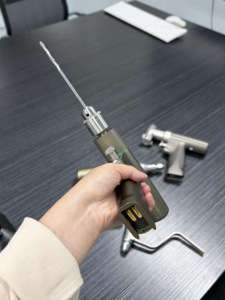
High Performance Orthopedic Bone Drill System for TKR THR Trauma and Joint Replacement Surgery
Autoclavable modular orthopedic power tool system delivering stepless speed control, low thermal necrosis risk, and ergonomic surgical balance.
Contact Us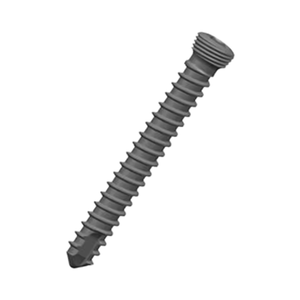
Geasure CE Certified Orthopedic Surgery 3.5mm Titanium Locking Screws Implants Plate Trauma Dental Implants Self-tapping Cortex
Self-tapping cortical and locking titanium screws engineered to ISO 5832-3 standards, eliminating particulate friction debris during insertion.
Contact Us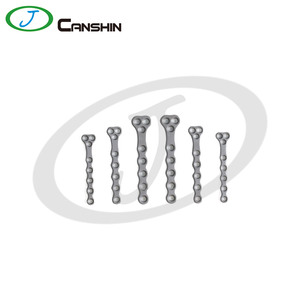
Veterinary Orthopedic Surgery Implant T Shape Reconstruction Locking Plate with Pure Titanium
Grade 2 commercially pure (CP) titanium T-plates offering optimal ductility and anatomical contouring for complex reconstructive procedures.
Contact Us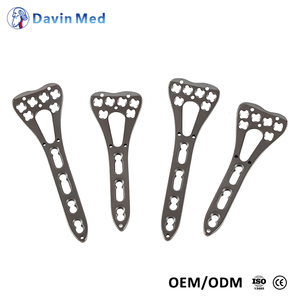
Titanium Two Column Volar Distal Radius Locking Plate 2.7mm Variable Angle Orthopedic Trauma Implant For Wrist Fracture
Anatomic double-column wrist fracture fixation system with variable-angle locking technology to safeguard soft tissue structures in distal radius trauma.
Contact Us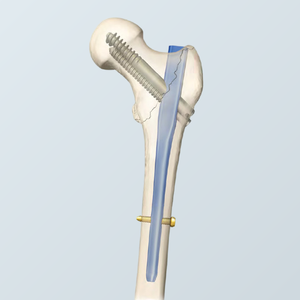
Wholesale Interlocking Intramedullary Intertan Nail Titanium Proximal Femur Trauma Surgical Implant
Integrated dual-screw compression intramedullary nail system providing superior resistance to cut-out and rotational collapse in trochanteric fractures.
Contact UsBiological Safety Evaluation & ISO 10993 Compliance Framework
An authoritative analysis of how leading Chinese orthopedic manufacturers execute rigorous biocompatibility validation to satisfy QCHP (Qatar Council for Healthcare Practitioners) and international hospital tender standards.
Cytotoxicity & Cell Viability (ISO 10993-5)
Implants undergo 72-hour elution extraction testing using L929 mouse fibroblast cultures. Cell viability must exceed 80% with zero morphological lysis. Quantitative MTT and Neutral Red Uptake (NRU) assays guarantee that zero toxic leachables migrate into human or animal tissue beds post-fixation.
Sensitization & Irritation (ISO 10993-10)
Rigorous polar (saline) and non-polar (cottonseed oil) extractions are evaluated via intracutaneous reactivity and Magnusson-Kligman Guinea Pig Maximization Tests (GPMT). Ensures complete bio-inertness, eliminating peri-implant inflammation, erythema, or delayed hypersensitivity reactions in human patients.
Systemic Toxicity & Pyrogenicity (ISO 10993-11)
Acute and sub-chronic systemic toxicity assays verify systemic physiological safety. Endotoxin thresholds are strictly controlled to less than 0.5 EU/mL (USP <85> compliant), preventing intra-operative aseptic fever, osteolysis, or premature hardware loosening.
| Evaluation Parameter | Testing Standard | Acceptance Criteria | Ortix Medical Test Result | QCHP Regulatory Status |
|---|---|---|---|---|
| In Vitro Cytotoxicity | ISO 10993-5 / GB/T 16886.5 | Cell Viability ≥ 70% (L929 Assay) | 98.4% Viability | Compliant |
| Chemical Characterization | ISO 10993-18 (ICP-MS) | Toxic heavy metal ions < 0.1 ppm | Below Detection Limit | Compliant |
| Systemic Toxicity | ISO 10993-11 / GB/T 16886.11 | No adverse systemic organ response | Zero Toxicity Phenotype | Compliant |
| Genotoxicity & Mutagenicity | ISO 10993-3 (Ames Test) | Non-mutagenic strain mutation rate | Negative (Clear) | Compliant |
| Bacterial Endotoxin (LAL) | USP <85> / EP 2.6.14 | < 0.5 EU/mL per device surface | < 0.05 EU/mL | Compliant |
| Corrosion & Passivation | ASTM F1089 / ASTM F86 | Zero pitting corrosion under anodic sweep | High Passivation Integrity | Compliant |
Material Metallurgical Science: ASTM F136 Ti-6Al-4V ELI vs. PEEK Optima
All surgical locking plates, intramedullary nails, and pedicle screws supplied by Ortix Medical utilize certified Grade 23 extra-low interstitial (ELI) Titanium Alloy (ASTM F136) or PEEK Optima polymers. Interstitial elements such as oxygen, nitrogen, and iron are strictly capped below 0.13% to maximize fatigue strength, fracture toughness, and magnetic resonance imaging (MRI) artifact reduction during post-operative clinical follow-ups in Doha radiology centers.
Localized Clinical Application Scenarios Across Doha Hospitals
Tailoring advanced bio-materials and biomechanical stability to the specific medical demographics and environmental requirements of the State of Qatar.
1. High-Impact Urban Trauma & Infrastructure Injuries
Doha’s rapidly expanding urban architecture, metro expansion, and transport hubs generate high-velocity polytrauma cases requiring rigid internal fixation. Medical institutions such as Hamad General Hospital Trauma Center require reliable, fast-insertion trauma kits.
- Solution: Two-Column Volar Distal Radius Plates and Interlocking Proximal Femoral Nails.
- Clinical Benefit: Pre-contoured locking plates eliminate intraoperative bending delays, while variable-angle locking screws securely anchor high-energy comminuted fractures.
- Biocompatibility Edge: Electrochemical Type II anodization reduces friction coefficient, preventing tendon adhesion beneath the volar ligament.
2. Diabetic Bone Healing & Osteoporotic Fracture Fixation
The Gulf region experiences a elevated prevalence of Type-2 diabetes mellitus, which frequently leads to microvascular complications, compromised bone mineral density, delayed fracture union, and Charcot neuroarthropathy.
- Solution: Micro-Arc Oxidized (MAO) Osteoporotic Humeral Nails and Cannulated Screws.
- Clinical Benefit: Bioactive microporous titanium oxide coatings foster early osteoblast attachment and calcium phosphate precipitation, compensating for sluggish metabolic bone healing in diabetic Qatari patients.
- Toxicity Safety: Certified zero-nickel composition protects against systemic inflammation in immunocompromised patients.
3. Specialized Sports Medicine & Arthroscopic Repair
With world-renowned sports medicine institutions like Aspetar Sports Medicine Hospital in Doha leading athlete recovery, demand for non-inflammatory, bio-absorbable, and high-strength titanium suture anchors is paramount.
- Solution: PEEK Suture Anchors, ACL Interface Screws, and Ultra-High Speed Power Drill Systems.
- Clinical Benefit: Modulus of elasticity matching human cortical bone (3.5 GPa) minimizes stress shielding during ligament reconstruction in professional athletes and equestrian sports.
4. Veterinary Orthopedics for Elite Falconry & Canine Clinics
Veterinary medicine in Qatar represents a specialized market, catering to high-value falcons, camel racing clubs, and pedigree canine breeding centers requiring precision miniature fixation.
- Solution: Davin Med Canine Total Hip Replacement & T-Reconstruction Locking Plates.
- Clinical Benefit: Pure titanium microstructure offers lightweight strength without weight penalties, ensuring successful joint restoration for severe canine patellar luxation and trochlear dysplasia.
Qatar Healthcare Trends & QCHP Regulatory Environment
Navigating the shift toward direct OEM supplier partnerships, Vision 2030 healthcare mandates, and climate-resistant medical device logistics in the Middle East.
Qatar National Vision 2030 Healthcare Expansion
The Ministry of Public Health (MoPH) in Qatar is modernizing its hospital infrastructure. Direct sourcing of ISO 13485 certified Chinese implants reduces hospital procurement overhead by up to 35% without compromising clinical efficacy or material purity.
Strict QCHP Medical Registration Dossiers
Importers and hospital purchasing syndicates in Doha require full Technical Documentation (STED format), including biocompatibility testing reports (ISO 10993), raw material melt certificates, and ISO 11607 sterile barrier validation. Ortix Medical supplies pre-cleared regulatory packages to expedite local QCHP registration.
Thermal Stability & Logistics Resilience
Logistics through Doha’s Hamad Port or Hamad International Airport (DOH) involve ambient summer temperatures reaching 50°C. Implants must feature durable Tyvek® pouch heat-sealing and corrosion-proof passivation layers to prevent packaging compromise or surface oxidation during storage.
Why Partner with Ortix Medical Devices Co., Ltd.?
Combining industrial manufacturing scale with clinical precision to support medical device distributors and hospital networks across the State of Qatar.
60,000 m² Advanced Production Hub
Our manufacturing complex houses over 450 high-precision CNC Swiss-type automatic lathes (Citizen, Star) and 5-axis machining centers (DMG Mori), ensuring strict dimensional tolerances down to ±0.005 mm for complex spinal rods and micro locking plates.
With an annual production capacity exceeding 7,000,000 units (~20,000 units per day), we eliminate backorder delays for high-volume hospital tenders in Doha.
70+ In-House Biomedical R&D Engineers
Our engineering team works closely with orthopedic surgeons to design anatomical contouring, low-profile screw heads, and intuitive instrument kits. We specialize in OEM and ODM private-label development, providing custom laser marking, tailored tray layouts, and localized instructions for use (IFU) in English and Arabic.
Raw Material Traceability
100% of titanium bars and PEEK stock are sourced with full chemical melt certificates and lot-by-lot mill test reports (MTR).
Class 100,000 Cleanroom
Washing, primary packaging, and Tyvek® pouch sealing are performed inside ISO Class 7/8 certified cleanroom environments.
Low MOQ Flexibility
Mixed-SKU ordering allows Qatari distributors to combine plates, screws, nails, and instruments in a single freight shipment.
Biomechanical Testing Lab
In-house fatigue testing rigs perform ASTM F543 pull-out strength and ASTM F382 static flexural rigidity validation.
Frequently Asked Questions by Qatari Importers & Hospitals
Essential guidance for purchasing agents, regulatory managers, and surgical distributors seeking China orthopedic suppliers for Doha facilities.
Ortix Medical operates under an ISO 13485 certified quality management system and holds US FDA establishment registration. We provide complete regulatory technical documentation (STED format), full ISO 10993 biological evaluation reports, raw material metallurgical certificates, and sterilization validation protocols to support your local registration with the Qatar Ministry of Public Health (MoPH).
Each batch of orthopedic implants is accompanied by a Certificate of Analysis (COA) verifying raw material composition (ASTM F136 / ISO 5832-3), cytotoxicity test clearance (ISO 10993-5), bacterial endotoxin limits (< 0.5 EU/mL under USP <85>), and passivation layer verification. Full 10993-18 chemical characterization data is available upon request for registration dossiers.
Yes. Our in-house design and production teams support complete OEM/ODM solutions. We offer precision fiber-laser marking for product codes, batch numbers, and distributor logos directly on implants, as well as customized pouch packaging, box artwork, and bilingual (Arabic/English) Instructions for Use (IFU) compliant with GCC health standards.
Standard catalog items are stocked in raw or semi-finished states for rapid dispatch. Air freight shipments to Hamad International Airport (DOH) typically take 5 to 7 business days via DHL, FedEx, or Qatar Airways Cargo. Sea freight shipments to Hamad Port generally take 20 to 25 days depending on the shipping line.
We understand that building local inventory in emerging or trial markets requires SKU flexibility. We support low MOQ requirements and allow mixed-category orders (e.g., combining trauma plates, cannulated screws, veterinary systems, and drill power tools in a single order) so you can evaluate market reception without excessive capital lockup.
Yes. Qualified distributors, hospital procurement boards, and orthopedic department heads can request evaluation sample sets through our Free Sample initiative to evaluate surface finish, dimensional tolerances, thread engagement, and surgical instrument ergonomics prior to bulk contracting.
All sterile and non-sterile products are packaged using medical-grade Tyvek® laminate pouches and heavy-duty protective outer cartons. Accelerated aging and thermal stress testing (ASTM F1980) ensure that sterile seals and passive titanium oxide layers remain completely uncompromised under extreme ambient heat and humidity conditions during transit.