High-Demand Orthopedic & Maxillofacial Systems for Mexico City
Engineered to international ISO 13485 and ASTM standards. Available for immediate distributor supply, private label OEM, and low-MOQ batch fulfillment across Latin America.
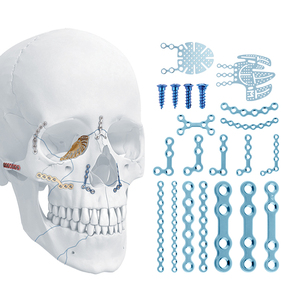
Titanium Maxillofacial Plate And Screw Maxillofacial System Plate For Orthopedic Surgery Maxillofacial Implants Mini Plate Screw
Ultra-low profile 1.5mm/2.0mm micro-plating system engineered from Grade 5 Ti-6Al-4V ELI titanium. Designed for precise anatomical adaptation in trauma and orthognathic reconstruction.
Contact Us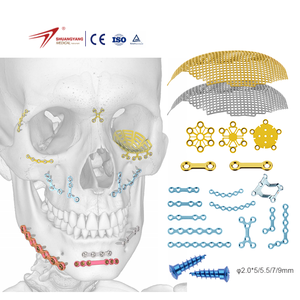
Shuangyang Medical Neurosurgery Maxillofacial System Cranial Implant Titanium Mesh Cranioplasty Skull Fixation Plating System
Rigid, biocompatible titanium mesh and low-profile fixation screws optimized for neurosurgical cranioplasty, traumatic defect repair, and complex cranial vault reconstruction.
Contact Us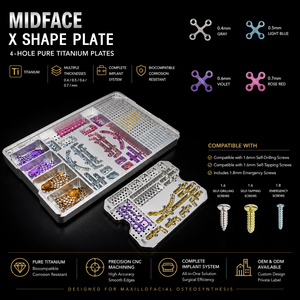
OEM & ODM Available Medical Titanium X Plate Maxillofacial Implant For Facial Reconstruction Orthopedic Implant Application
Anatomically shaped X-plates engineered for midface compression and stabilization. Available in multiple arm angles with customized anodization options for distributor brands.
Contact Us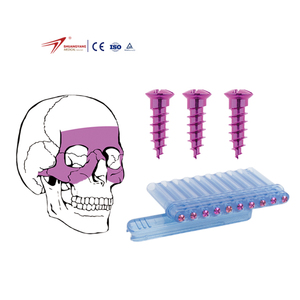
Orthopedic Implant Maxillofacial Surgery Plate Screw Maxillofacial 1.5 Self -Drilling Screws For Maxillofacial Screws Trauma
High-torque 1.5mm self-drilling cross-fit titanium screws. Provides rapid bone engagement and superior pull-out strength in facial fracture emergency surgeries.
Contact Us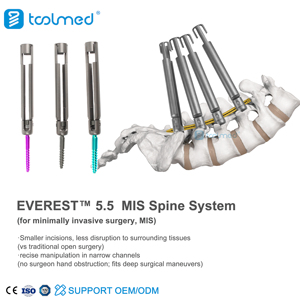
Ortopédico Implante 5.5 MIS Titanium Polyaxial Pedicle Screw System Orthopedic Spine Instrument Set Implants
Minimally invasive spinal stabilization system featuring 5.5mm polyaxial screws with 52-degree angulation cone and matching ergonomic surgical instrumentation tray.
Contact Us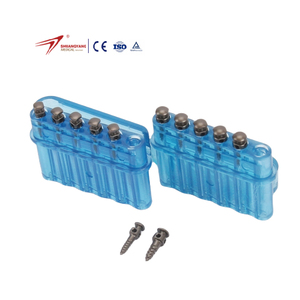
Shuangyang Orthodontic Screw Implant Higher Quality Product In Implants & Interventional Materials
Precision micro-anchorage orthodontic screws crafted from surgical-grade titanium. Offers immediate mechanical loading capability and bio-stable mucosal integration.
Contact Us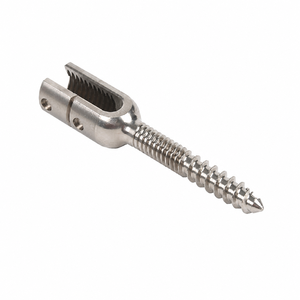
Titanium Pedicle Screw CNC Machining Service Spinal Orthopedic Bone Screw Custom Precision OEM Parts
5-axis CNC Swiss-milled custom spinal screws. Dual-thread geometry optimized for superior cancellous and cortical bone fixation. Tailored OEM manufacturing.
Contact Us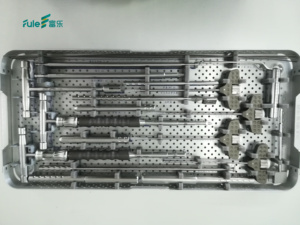
High Quality Orthopedic Surgical Implants & Interventional Materials MIS Minimally Invasive Instrument
Complete modular instrument set for minimally invasive trauma and spinal interventions. Manufactured from German stainless steel with specialized anti-glare passivation.
Contact UsExecutive Summary: Navigating the Orthopedic Supply Ecosystem in Mexico City & LATAM
Mexico City (CDMX) serves as the primary medical device commercial hub for Mexico and the broader Latin American (LATAM) region. As the demand for advanced surgical interventions accelerates across both public healthcare systems—such as the Instituto Mexicano del Seguro Social (IMSS), ISSSTE, and PEMEX—and top-tier private healthcare networks like Grupo Ángeles, Médica Sur, and Centro Médico ABC, orthopedic distributors face unprecedented pressures. Importers and local procurement firms must balance stringently regulated quality compliance, competitive tender pricing, fast replenishment lead times, and seamless regulatory approval through COFEPRIS (Comisión Federal para la Protección contra Riesgos Sanitarios).
Becoming a market-leading orthopedic implant distributor in Mexico City requires more than simply securing lower per-unit purchase costs. It demands a strategic manufacturing alliance with an established, ISO 13485-certified global original equipment manufacturer (OEM) and original design manufacturer (ODM) that provides continuous information gain, complete technical documentation dossiers, flexible batch sizes, and proven clinical biomechanics.
1. Demographic and Epidemiological Drivers in Mexico
The macroeconomic landscape for orthopedic surgical devices in Mexico is driven by key demographic shifts and clinical needs:
- High Trauma & Emergency Incidence: High urban traffic density, industrial activities, and orthopedic emergency workloads require immediate availability of locking compression plates (LCP), intramedullary nails (PFNA), and maxillofacial trauma sets in emergency trauma centers such as Hospital Juárez de México and Instituto Nacional de Rehabilitación (INR).
- Aging Population & Degenerative Conditions: Lumbar spinal stenosis, spondylolisthesis, and degenerative disc diseases are expanding rapidly. This elevates demand for 5.5mm/6.0mm polyaxial pedicle screws, PEEK interbody fusion cages (TLIF/PLIF), and 3D-printed porous spinal implants.
- Expansion of Private Surgical Hubs: Private hospital groups in Mexico City, Guadalajara, and Monterrey are heavily investing in Minimally Invasive Surgery (MIS) platforms, requiring slim-profile access ports, percutaneous pedicle screws, and specialized MIS surgical tools.
2. COFEPRIS Regulatory Pathways & Technical Dossier Requirements
Foreign manufacturers entering the Mexican market alongside local distributors must adhere to Mexican Official Standards (Normas Oficiales Mexicanas), specifically NOM-241-SSA1-2021 (Good Manufacturing Practices for Medical Devices) and NOM-072-SSA1-2012 (Labeling of Medical Devices). Obtaining a Registro Sanitario (Sanitary Registration) from COFEPRIS requires the following technical file backing:
- ISO 13485:2016 Certification: Complete Quality Management System proof for orthopedic implant design and manufacturing.
- Certificate of Free Sale (CFS / CLV): Officially apostilled certificates confirming legal market distribution in the country of origin or primary global jurisdictions.
- Biocompatibility & Biomechanical Test Reports: Comprehensive static and dynamic fatigue test results according to ASTM F1717 (spinal constructs), ASTM F136 (Titanium grade 5 ELI), and ASTM F2026 (PEEK polymer implants).
- Localized Packaging & IFUs in Spanish: Instructions for Use (IFU) and sterilization indicator labels tailored to Mexican hospital protocols.
Enterprise Capacity Built to Empower Global Distributors
Ortix Medical Devices Co., Ltd. (incorporating Shuangyang Medical systems) operates world-class production infrastructure designed for scalable growth, high precision, and rapid order execution.
Deep Technical Analysis of Core Orthopedic Implant Sub-Systems
To successfully capture market share in Mexico City, distributors must present surgeons with implants engineered for superior primary stability, minimal soft tissue disruption, and easy intraoperative handling. Below is an engineering overview of our three primary product lines available for distribution.
A. Titanium Cranial & Maxillofacial (CMF) Plating Systems
Maxillofacial surgery demands extreme micro-precision due to delicate anatomical structures and aesthetic considerations. Our CMF plating catalog includes 1.5mm, 2.0mm, and 2.4mm mini and micro plate-screw configurations, as well as customized titanium cranioplasty mesh.
- Raw Material Integrity: Milled exclusively from Grade 5 Titanium Alloy (Ti-6Al-4V ELI, ASTM F136), offering high tensile strength (≥860 MPa) while maintaining excellent ductileness for manual intraoperative contouring.
- Self-Drilling Screw Thread Dynamics: 1.5mm self-drilling screws feature patented cross-slot drive heads that eliminate cam-out, combined with aggressive apical flutes that enable rapid bone penetration without pre-drilling in thin cortical bone.
- 3D Mesh & PEEK Skull Reconstruction: Titanium mesh sheets are available in variable thicknesses (0.4mm to 0.8mm) with high porosity to facilitate vascularization and soft-tissue reattachment during neurosurgical cranioplasty procedures.
B. Thoracolumbar Spine & Interbody Fusion Systems
Spinal fixation constructs must withstand multi-directional biomechanical stress, torsional forces, and cyclical fatigue loading. Our spinal product range is structured around open and percutaneous (MIS) platforms:
- 5.5mm / 6.0mm Polyaxial Pedicle Screws: Features a friction-head mechanism allowing smooth 52° spherical friction motion before set-screw locking. Dual-lead thread geometry doubles insertion speed while improving pull-out strength in osteoporotic bone.
- MIS Minimally Invasive Fixation: Built with extended breakaway towers and cannulated core geometries to guide percutaneous rod delivery, drastically reducing muscular trauma and blood loss during TLIF/PLIF procedures.
- PEEK & 3D-Printed Fusion Cages: Cervical (Uni-C) and lumbar fusion cages manufactured from medical-grade PEEK (Polyether ether ketone - ASTM F2026) matching the elastic modulus of cancellous bone to eliminate stress shielding. 3D-printed porous titanium options feature interconnected micro-pores (300–500 μm) to accelerate bony ingrowth.
C. Trauma Internal Fixation & Intramedullary Nailing
Trauma management requires reliable dynamic compression and stable fracture reduction under severe physiological loads.
- Locking Compression Plates (LCP): Combines dynamic compression unit (DCU) slots with threaded locking holes. Allows surgeons to employ traditional compression plating, locking bridge plating, or a combination of both.
- Proximal Femoral Nail Antirotation (PFNA): Intramedullary nailing system engineered with helical lag blades that compress osteoporotic cancellous bone rather than removing it, significantly decreasing cut-out risks in intertrochanteric fractures.
- Passivated Surface Finishing: All implants undergo electro-chemical anodization and glass-bead blasting to create a dense, passive titanium oxide layer that maximizes corrosion resistance and prevents ion release.
Why Leading Mexican Importers Partner with Ortix Medical
We solve the core operational bottlenecks that medical device distributors face when sourcing high-volume orthopedic products globally.
Low MOQ & Mixed-SKU Orders
We support flexible, mixed-batch ordering. Distributors can combine maxillofacial plates, spinal screws, fusion cages, and surgical instruments in a single batch—minimizing capital lockup while ensuring catalog breadth.
Turnkey OEM & ODM Private Labeling
Build your brand equity across Mexico. We offer precision laser marking of your company logo and part numbers, localized packaging design, custom color anodization, and Spanish IFU development.
Lot-Level Quality Traceability
Every implant is backed by raw material heat numbers, 3D coordinate measuring machine (CMM) inspection reports, and ISO Class 7 cleanroom packaging—ensuring zero hassle during COFEPRIS audits.
5-Stage Global Distribution & Fulfillment Process
A structured, risk-mitigated onboarding framework tailored for medical device importers operating in Mexico City and regional LATAM territories.
Portfolio Mapping
We review your target market (IMSS tenders, private surgical clinics) to curate an optimal implant-to-instrument mix matching Mexican clinical preferences.
Sample Evaluation
Receive physical evaluation samples for key orthopedic surgeons and hospital purchasing committees to verify surface finish, thread torque, and tool fit.
COFEPRIS Dossier
Our regulatory team provides ISO 13485 certificates, Free Sale Certificates (CFS), mechanical test reports, and technical drawings for your registration submission.
Cleanroom Production
Manufacturing executes under strict CNC tolerances, followed by automated ultrasonic washing, passivating, laser etching, and ISO Class 7 cleanroom sealing.
Air Freight & Clearance
Consolidated air cargo delivery directly to Benito Juárez International Airport (AICM) in Mexico City or your designated freight forwarder with full customs documentation.
Emerging Healthcare Trends Shaping Mexico’s Orthopedic Sector (2025–2030)
As the healthcare landscape in Mexico evolves, key technological and economic trends are reshaping how orthopedic implants are purchased, distributed, and utilized:
1. The Shift Toward Decentralized Ambulatory Surgical Centers (ASCs)
In major metropolitan regions including Mexico City, Guadalajara, and Monterrey, surgical care is migrating from large tertiary hospitals toward specialized outpatient centers. These ASCs prioritize fast-turnaround procedures using Minimally Invasive Surgery (MIS) pedicle screws, cannulated trauma screws, and self-locking cervical interbody cages. Distributors offering lightweight, modular instrument trays tailored for fast sterilization gain a strong competitive advantage.
2. Local OEM Brand Building vs. Generic Distribution
Leading Mexican distributors are increasingly moving away from representing single high-cost Western brands. Instead, they are establishing proprietary local private-label brands via OEM partnerships with Ortix Medical. This strategy allows distributors to protect their margins, control retail pricing in private hospitals, and tailor tender bids for IMSS and ISSSTE contracts.
3. Rigorous COFEPRIS Post-Market Surveillance
Mexican health authorities are tightening post-market surveillance and raw material traceability requirements under NOM-241-SSA1-2021. Medical device distributors must partner with factories that supply lot-specific chemical analysis (mill test certificates) and dynamic fatigue performance data to prevent compliance interruptions.
Frequently Asked Questions for Mexican Importers & Procurement Teams
Clear, direct answers to common questions asked by orthopedic device distributors in Mexico City before starting partnership discussions.
How does Ortix Medical support COFEPRIS Sanitary Registration (Registro Sanitario) in Mexico? +
We provide a comprehensive technical dossier package formatted for COFEPRIS submission. This includes our ISO 13485:2016 quality management system certificate, FDA establishment registration records, apostilled Certificates of Free Sale (CFS / CLV), material biocompatibility reports (ASTM F136 / ASTM F2026), dynamic mechanical test data (ASTM F1717 / ASTM F543), and technical product drawings. Our regulatory support team works directly with your legal third-party proxy or regulatory affairs consultant in Mexico City.
What is the minimum order quantity (MOQ) for mixed spine, trauma, and CMF shipments? +
We offer industry-leading low MOQs to support growing distributors. Importers can combine different product families—such as maxillofacial titanium plates, pedicle screws, PEEK cages, and trauma locking plates—in a single order batch. This flexible ordering model prevents high initial inventory holding costs while ensuring you can supply full surgical sets to local hospital networks.
Can Ortix Medical manufacture private-label implants with custom Spanish packaging? +
Yes. Our complete OEM/ODM service includes high-precision fiber laser etching of your brand logo, company name, reference code, and lot number on every implant and surgical tool. We also design customized primary box packaging, sterile pouch artwork, and Instructions for Use (IFU) translated into Spanish in compliance with Mexican labeling standard NOM-072-SSA1-2012.
Are surgical instrument sets included with the implant orders? +
Yes. Every implant system—whether it is our 5.5mm MIS pedicle screw system, 1.5mm maxillofacial system, or distal tibia locking plate line—is paired with a dedicated, ergonomic surgical instrument tray. Trays are built from hard-anodized aluminum and medical-grade stainless steel designed for repeated autoclave sterilization cycles in hospital central sterile supply departments (CSSD).
What are the standard production lead times and air shipping transit times to Mexico City? +
Standard catalog items are kept in stock for rapid dispatch. Custom OEM production orders typically take 15 to 30 days depending on order complexity and laser marking requirements. Air cargo shipments sent directly to Mexico City’s Benito Juárez International Airport (AICM) or Felipe Ángeles International Airport (AIFA) take approximately 5 to 7 business days via major carriers (DHL, FedEx, or specialized air freight forwarders).
What raw materials and quality testing certifications accompany each shipment? +
Every shipment is delivered with lot-specific Mill Test Certificates verifying raw material chemical composition and mechanical properties (Grade 5 Ti-6Al-4V ELI, PEEK OPTIMA, or 316L Surgical Stainless Steel). In addition, our certified testing laboratory provides dimensional CMM inspection reports, surface roughness measurements, and passivation test records.
Expand Your Orthopedic Distribution Business in Mexico City Today
Partner with an established ISO 13485 & FDA-registered manufacturer. Access premium spine, trauma, joint, and maxillofacial implant systems with low MOQ flexibility, complete COFEPRIS registration support, and competitive OEM pricing.